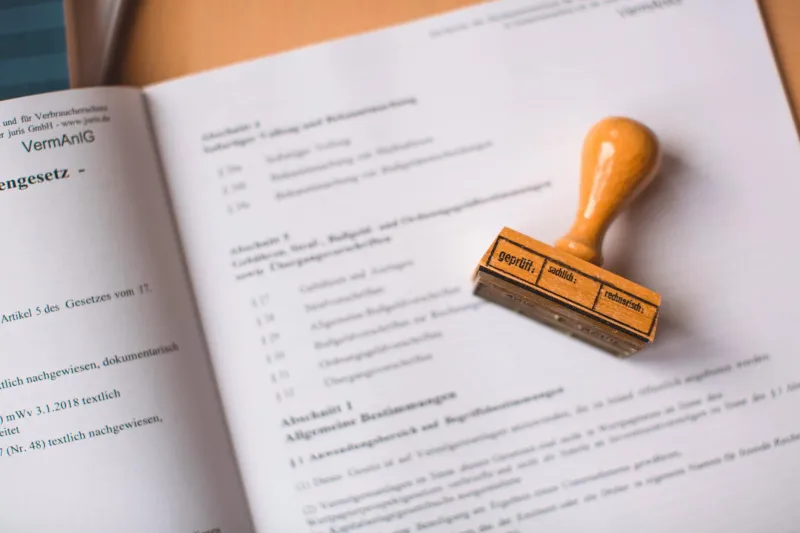
The Patent That Broke Logic
Imagine walking outside on a sunny day only to receive a cease-and-desist letter for unauthorized use of patented light. It sounds like satire, but in 1908, Dr. Heinrich Zimmermann came dangerously close to making this absurd scenario a legal reality.
Zimmermann, a German-born inventor working in Chicago, had developed what he called a "revolutionary solar concentration device." But when he filed his patent applications, something went spectacularly wrong with the legal language. His attorneys, apparently trying to create the broadest possible protection for their client's invention, wrote claims so sweeping that they essentially described the fundamental process of sunlight itself.
The Accidental Solar Monopoly
The trouble began when Patent Application No. 847,293 landed on the desk of examiner William Morrison at the U.S. Patent Office. Morrison later recalled that he had to read the application three times before he understood what Zimmermann was actually claiming.
The patent didn't just cover Zimmermann's specific device for concentrating solar energy. Due to poorly worded legal descriptions, it appeared to claim ownership over "the collection, concentration, and utilization of solar radiation for practical purposes" — essentially, any use of sunlight for human benefit.
Under the patent's broad language, everything from hanging laundry to growing crops could theoretically constitute patent infringement. Even more bizarrely, the application included diagrams that seemed to show the sun itself as part of Zimmermann's "invention."
Courts Take the Impossible Seriously
What makes this story truly unbelievable is that the legal system couldn't simply laugh it off. Patent law in 1908 required examiners to evaluate applications based on their technical merit and legal language, not common sense. If the paperwork was filed correctly and the claims were technically novel, the patent office had limited grounds for rejection.
Morrison spent six months consulting with colleagues and legal experts. The consensus was troubling: Zimmermann's application, while obviously absurd in intent, was surprisingly solid in its legal construction. Previous patents had established precedents for claiming natural processes when combined with human innovation. Zimmermann's lawyers had simply pushed this logic to its breaking point.
The case eventually reached federal court when three other inventors challenged Zimmermann's pending patent. They argued that granting such broad claims would effectively end solar research in America. Judge Harrison Mills presided over what newspapers dubbed "The Trial of the Sun."
The Legal Loophole That Almost Worked
During the proceedings, Zimmermann's defense team made a startling argument. They pointed out that patent law had already allowed individuals to claim ownership over natural phenomena when combined with human ingenuity. Samuel Morse had patented the use of electromagnetic signals for communication. Thomas Edison held patents on harnessing electricity for illumination.
Zimmermann's lawyers argued that their client was simply the first person clever enough to patent solar energy comprehensively. They even produced a working prototype of his solar concentration device, proving that his invention was real, even if his legal claims were impossibly broad.
The prosecution, meanwhile, faced the challenging task of explaining why this patent was different from hundreds of others that had claimed natural processes. Their strongest argument wasn't legal but practical: granting Zimmermann's patent would create a monopoly over the sun itself, something no legal system could reasonably enforce.
Reality Wins, Barely
After three weeks of testimony, Judge Mills delivered a ruling that would influence patent law for decades. He acknowledged that Zimmermann's application was "technically compliant with existing patent statutes" but ruled that patents could not be granted for phenomena that existed "independently of human innovation and prior to human knowledge."
The decision established what became known as the "Zimmermann Precedent" — the principle that patent claims, no matter how cleverly worded, cannot extend to natural phenomena that humans merely discover rather than create.
Zimmermann eventually received a much narrower patent for his specific solar concentration device, which proved moderately successful in the early solar industry. But his attempt to patent the sun became a cautionary tale about the intersection of human ambition and legal loopholes.
The Legacy of an Impossible Dream
The Zimmermann case revealed something unsettling about early 20th-century patent law: the system was so focused on protecting innovation that it nearly allowed one man to claim ownership of daylight itself. Legal scholars still study the case as an example of how well-intentioned laws can produce genuinely absurd outcomes when pushed to their logical extremes.
Today, patent applications undergo much more rigorous review specifically because of cases like Zimmermann's. The next time you step outside and feel the sun on your face, remember that you're experiencing something that, for a brief moment in 1908, one ambitious inventor almost owned completely.