The Purple Disaster That Changed Everything: How a Teenager's Chemistry Failure Revolutionized the World
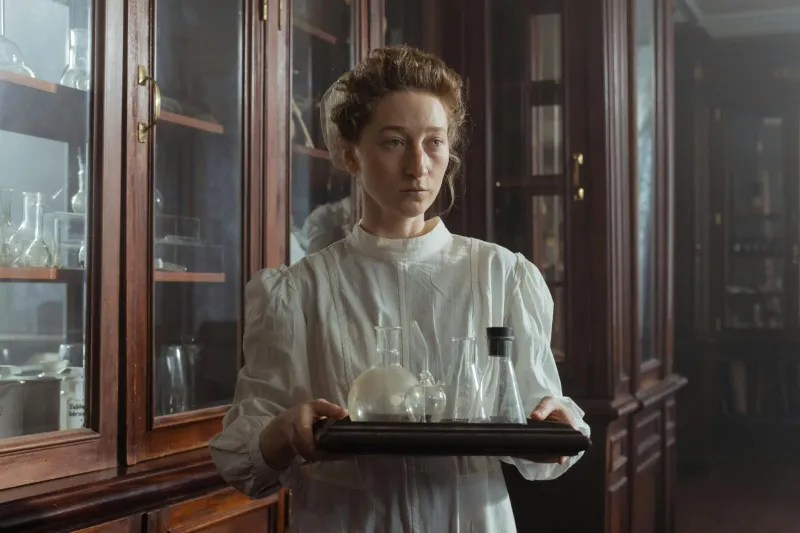
Picture this: You're an ambitious teenager working in your makeshift home laboratory, convinced you're about to cure one of humanity's deadliest diseases. Instead, you create a sticky purple goo that looks like the aftermath of a grape juice explosion. Most people would clean up the mess and try again. William Henry Perkin decided to change the world.
The Malaria Mission That Went Purple
In the spring of 1856, eighteen-year-old William Perkin was spending his Easter vacation doing what any normal chemistry-obsessed teenager would do: attempting to synthesize quinine in his cramped home laboratory above his family's house in London. Quinine, extracted from South American cinchona bark, was the only known treatment for malaria, and Britain's colonial empire was hemorrhaging money trying to keep its tropical territories supplied with the precious medicine.
Perkin's professor at the Royal College of Chemistry had suggested that someone might be able to create artificial quinine from coal tar—a black, sticky byproduct of gas production that was piling up in industrial cities like London's equivalent of toxic waste. It seemed like a reasonable challenge for a brilliant young chemist who'd already impressed his professors.
What happened next was the kind of spectacular failure that makes chemistry teachers weep.
Perkin mixed aniline (derived from coal tar) with potassium dichromate, expecting to produce the clear, bitter crystals of synthetic quinine. Instead, he got a black, tarry mess that looked like someone had melted down a tire. Most students would have dumped the failed experiment and started over. But Perkin, perhaps driven by teenage stubbornness or genuine scientific curiosity, decided to see what would happen if he tried to dissolve his disaster in alcohol.
When Failure Turns Purple
The moment alcohol touched that black sludge, something magical happened. The mixture transformed into the most brilliant, vibrant purple solution Perkin had ever seen. This wasn't just any purple—it was a color so intense and lustrous that it seemed to glow with its own inner light.
At the time, purple was the most expensive color in the world. True purple dye came from murex shells harvested from the Mediterranean, and it took thousands of these tiny sea snails to produce even a small amount of Tyrian purple. The color was so costly that only emperors and the wealthiest aristocrats could afford it. "Born to the purple" wasn't just an expression—it was an economic reality.
Perkin had stumbled upon something that shouldn't exist: a purple dye that could be mass-produced from industrial waste.
But here's where the story gets even stranger. Perkin's first instinct wasn't to celebrate—it was to throw the whole thing away. He'd failed to cure malaria, after all. The purple discovery only seemed valuable after he started thinking like an entrepreneur instead of a frustrated chemistry student.
The Teenager Who Launched an Industry
Against his father's wishes and his professor's advice, Perkin dropped out of college and bet everything on his accidental purple. He patented his discovery (calling it "mauveine" after the French word for the mallow flower), convinced his father to invest the family savings, and built a factory to mass-produce the world's first synthetic dye.
The timing couldn't have been more perfect. The 1850s were the dawn of the Industrial Revolution's second phase, when mass production was making luxury goods affordable for the growing middle class. Suddenly, a shopkeeper's wife in Manchester could afford to wear the same color as Queen Victoria.
The fashion world went absolutely insane for Perkin's purple. It became the must-have color of the 1860s, turning up in everything from ball gowns to military uniforms. Perkin became incredibly wealthy before his 25th birthday, all from a color he'd initially considered worthless.
The Ripple Effects Nobody Saw Coming
But the real story isn't just about purple fabric—it's about how one teenager's failed experiment accidentally launched the entire modern chemical industry. Perkin's success proved that coal tar, previously considered industrial garbage, was actually a treasure trove of useful compounds.
Within decades, chemists were using Perkin's methods to create not just dyes, but medicines, explosives, plastics, and synthetic materials that would reshape everything from warfare to healthcare. The pharmaceutical industry, the petrochemical industry, even the development of modern explosives—all of it traces back to that moment when a frustrated teenager decided his purple mess might be worth something after all.
The synthetic dye industry that Perkin founded eventually produced the chemical precursors for aspirin, early antibiotics, and countless other medicines. In trying to cure malaria, he didn't just fail—he accidentally created the foundation for curing hundreds of other diseases.
The Accident That Painted History
Today, William Perkin is remembered as the father of the synthetic chemical industry, but his story remains one of history's most perfectly timed accidents. A teenager's spring break chemistry experiment, motivated by imperial medicine needs and enabled by industrial waste, accidentally solved a luxury problem that had existed since ancient Rome.
The next time you see a brilliantly colored piece of clothing or take a synthetic medication, you're witnessing the legacy of an 18-year-old's beautiful failure. Sometimes the most world-changing discoveries happen when we're trying to do something else entirely—and have the wisdom to recognize gold when it comes disguised as garbage.