The Bloodless Battle That Redrew America: How a Swamp War Created Two States and Nearly Started an International Incident
The War Nobody Wanted to Fight
Imagine going to war over a patch of swampland so worthless that local newspapers called it "a place where only frogs and fever could thrive." Now imagine that this ridiculous conflict would reshape the entire American Midwest, create a new state, and leave behind legal paperwork so confusing that historians are still untangling it today.
Welcome to the Toledo War of 1835 — America's most absurd military conflict that somehow managed to be both completely pointless and historically transformative at the same time.
The Strip That Started It All
The trouble began with the Toledo Strip, a 468-square-mile wedge of land that included the thriving port city of Toledo, Ohio. When Ohio applied for statehood in 1803, sloppy surveying and conflicting maps created a boundary dispute with the Michigan Territory. Both claimed the valuable strip, which included not just Toledo but crucial access to Lake Erie's shipping routes.
For decades, nobody cared enough to resolve the dispute. Then Michigan decided it wanted statehood too, and suddenly everyone was very interested in who owned what.
When Politicians Pick Up Muskets
By 1835, tensions had escalated beyond angry letters. Michigan's territorial governor, Stevens Mason (who was all of 23 years old), mobilized the state militia. Ohio Governor Robert Lucas, not to be outdone, called up his own forces. Soon, thousands of armed men were marching toward a confrontation over what amounted to a glorified swamp.
President Andrew Jackson found himself in an impossible position. He needed Ohio's electoral votes for the upcoming election, but he couldn't exactly let states start shooting at each other. His solution was typically Jacksonian: send in federal mediators while quietly backing Ohio.
The Battle of Phillips Corners: America's Least Deadly War
On April 26, 1835, the two sides finally met in combat at Phillips Corners. The "battle" lasted about as long as a coffee break and produced exactly one casualty: Deputy Sheriff Ben Wood of Michigan, who was stabbed in the thigh with a penknife by an Ohio militiaman.
That's it. That was the entire war.
Wood survived (obviously), became something of a local celebrity, and later received a pension for his "war wound." The incident was so minor that some accounts suggest it might have been an accident during a scuffle rather than an actual battle.
The Deal That Changed Everything
Faced with the prospect of continued federal opposition and growing ridicule, Michigan agreed to a compromise that seemed like highway robbery at the time. They would give up their claim to the Toledo Strip in exchange for statehood and compensation in the form of the western Upper Peninsula — a remote wilderness that everyone assumed was worthless.
The joke was on Ohio. The Upper Peninsula turned out to contain some of the richest iron ore and copper deposits in North America, making Michigan far wealthier than Toledo ever could have. Meanwhile, the precedent set by the Toledo War's resolution directly led to Wisconsin's admission as a state when the Upper Peninsula proved too large for Michigan to manage effectively.
The Legal Mystery That Lasted Centuries
Here's where things get truly bizarre. During the height of the conflict, various municipal and county authorities issued proclamations, declarations, and official statements that historians have been puzzling over ever since. Some of these documents contained language so inflammatory and poorly worded that legal scholars have debated whether certain jurisdictions technically declared themselves in conflict with British North America (modern-day Canada).
The most famous example involves a resolution passed by Toledo's city council that denounced "foreign interference" in what they considered an internal American dispute. The problem? The resolution's language was so broad and its legal terminology so imprecise that it could be interpreted as rejecting British authority over the Great Lakes region — authority that Britain very much still claimed at the time.
The Paperwork Nobody Read
For 174 years, these documents sat in various archives, largely ignored by historians focused on the war's more dramatic elements. It wasn't until 2009 that a graduate student researching municipal law stumbled across the Toledo resolution and realized its potential implications.
The discovery sparked a minor academic controversy. Had Toledo accidentally declared war on Canada? Were other similar documents lurking in Midwestern archives? Legal historians began combing through records from the period, finding dozens of similarly worded proclamations from various Ohio municipalities.
The War That Keeps on Giving
The Toledo War's legacy extends far beyond confusing legal documents. It established precedents for federal intervention in state disputes, influenced the admission of multiple states, and demonstrated that even the most ridiculous conflicts can have profound consequences.
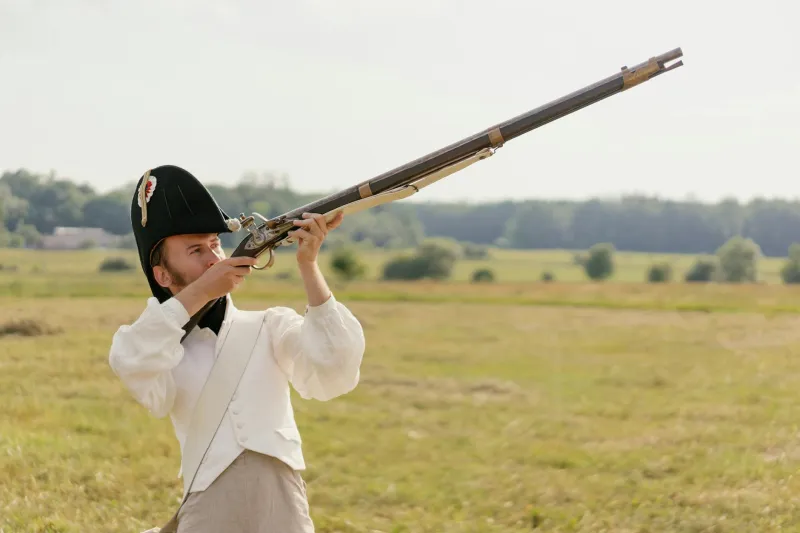
Today, Toledo and Michigan have largely made peace with their shared history. The city even celebrates "Toledo War Days" with reenactments that are considerably more entertaining than the original conflict. Michigan, meanwhile, has done quite well with its "consolation prize" of the Upper Peninsula, which has generated billions in mining revenue over the past century and a half.
The Lesson of the Swamp War
The Toledo War proves that history's most important moments don't always involve grand gestures or noble causes. Sometimes, a dispute over a mosquito-infested swamp can reshape a continent, create new states, and leave legal scholars scratching their heads for generations.
And sometimes, the most lasting consequence of a "war" isn't who won or lost, but the paperwork nobody bothered to read until it was almost two centuries too late to matter. In a world where we assume every historical detail has been thoroughly examined, the Toledo War reminds us that there are still surprises buried in dusty archives, waiting to make us question everything we thought we knew about the past.
After all, if a 23-year-old governor and a patch of worthless swampland can accidentally redraw the map of America, what other "impossible" stories are hiding in plain sight?