Twice Bought, Once Owned: The Kentucky Horse That Created a Legal Nightmare
The Sale That Started It All
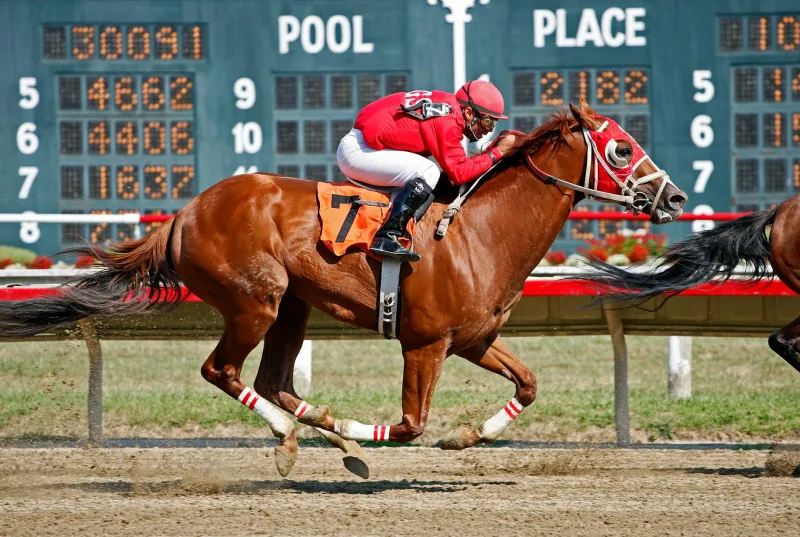
William Hartley had owned Thunder's Pride for three years when financial troubles forced him to sell his prize thoroughbred at a Lexington auction in March 1934. The bay stallion, with his distinctive white blaze and three white socks, had been Hartley's pride and joy on his small Kentucky farm. But the Great Depression had hit rural Kentucky hard, and Hartley needed the $800 the horse brought at auction to keep his farm afloat.
What Hartley didn't know was that he had just set in motion one of the most bizarre legal cases in American livestock history.
An Unexpected Reunion
Two years later, in April 1936, Hartley's fortunes had improved enough for him to consider buying another horse. At a livestock auction in Bowling Green—nearly 400 miles from where he'd sold Thunder's Pride—he spotted a bay stallion that caught his eye. The horse looked familiar, but Hartley dismissed the thought. What were the odds?
The seller, a dealer named Marcus Webb, claimed the horse was called "Kentucky Storm" and had come from a farm in Tennessee. The price was reasonable at $650, and Hartley liked the horse's temperament. He bought him on the spot and brought him home.
It wasn't until Hartley was grooming his new purchase a week later that he noticed something that made his blood run cold: a small scar on the horse's left hind leg, exactly where Thunder's Pride had been kicked by another horse years earlier.
The Impossible Discovery
Hartley spent the next month studying every detail of "Kentucky Storm." The more he looked, the more convinced he became that he had somehow repurchased his own horse. The white markings were identical. The scar was unmistakable. Even the horse's gait and personality seemed familiar.
But how could this be possible? Hartley had sold Thunder's Pride to a buyer from Ohio. The auction paperwork clearly showed the horse going to a farm near Cincinnati. How had Thunder's Pride ended up being sold as "Kentucky Storm" by a Tennessee dealer in Bowling Green?
Following the Paper Trail
Determined to solve the mystery, Hartley hired a local attorney to trace the horse's ownership history. What they discovered was a convoluted chain of sales that read like a livestock shell game.
After being sold in Lexington, Thunder's Pride had indeed gone to Ohio—but only for three months. The Cincinnati buyer had quickly resold the horse to a dealer in West Virginia, who sold him to another dealer in Virginia, who eventually sold him to Marcus Webb in Tennessee. Along the way, the horse's name had been changed twice, and his registration papers had been "lost" and replaced with new documents that listed him as a different horse entirely.
Webb, it turned out, specialized in buying horses with questionable paperwork and reselling them with clean documentation. He claimed he had no idea "Kentucky Storm" was actually Thunder's Pride, and that he'd purchased the horse in good faith from what appeared to be a legitimate dealer.
The Legal Puzzle
Hartley's case presented Kentucky courts with a legal nightmare. He was claiming ownership of a horse he had clearly sold, based on his assertion that he had unknowingly repurchased his own property. Webb argued that he had sold "Kentucky Storm" in good faith, and that Hartley's claims were impossible to prove.
The case hinged on a fundamental question: Can someone unknowingly buy back their own property, and if so, what happens to the chain of ownership in between?
A Decision That Changed Everything
After eighteen months of legal wrangling, the Kentucky Supreme Court ruled in Hartley's favor in a decision that would be cited in livestock cases for decades. The court determined that while Hartley had indeed sold Thunder's Pride, the subsequent chain of ownership had been fraudulent due to the deliberate alteration of the horse's identity.
More importantly, the court established that when property is sold under false pretenses and later repurchased by the original owner unknowingly, the original sale can be considered void if fraud is proven in the chain of ownership.
Webb was ordered to return Hartley's $650, and Hartley was granted clear title to Thunder's Pride. But the real victory was in the precedent set by the case.
The Legacy of Thunder's Pride
The Hartley v. Webb case became a landmark in American property law, particularly in rural communities where livestock trading was common. The decision led to stricter requirements for animal registration and documentation, making it much harder for dealers to "wash" stolen or fraudulently obtained animals through multiple sales.
By 1940, most states had adopted new livestock identification laws directly inspired by the Thunder's Pride case. The ruling also established the legal principle that buyers have a responsibility to verify the legitimate ownership of animals they purchase, even from apparently reputable dealers.
When Reality Defies Logic
William Hartley's story sounds like the kind of coincidence that could only happen in a movie. A man sells his horse, only to unknowingly buy the same animal back two years later hundreds of miles away. But sometimes reality creates scenarios so improbable that they reshape the law itself.
Thunder's Pride lived out his days peacefully on Hartley's farm, apparently unbothered by his journey through the legal system. Hartley, meanwhile, became something of a local celebrity—the man who proved that sometimes you really can go home again, even if you're a horse.