When a War Hero Accidentally Founded His Own Nation: The Bizarre Birth of Sealand
The Fortress That Nobody Wanted
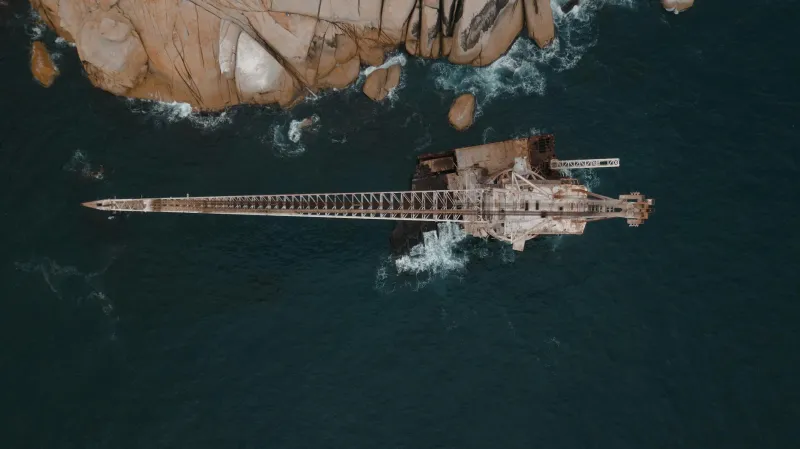
Seven miles off the coast of England sits a concrete platform that looks like something out of a dystopian movie. Built during World War II as an anti-aircraft gun emplacement, HM Fort Roughs was abandoned after the war ended, left to rust in the North Sea. For twenty years, it remained empty—until September 2, 1967, when retired British Army Major Paddy Roy Bates decided to make it his home.
Bates wasn't looking to start a revolution. He was actually running a pirate radio station and needed somewhere outside British territorial waters to broadcast without interference. The abandoned fort seemed perfect. What happened next sounds like the plot of a comedy film, except it's been playing out in international courts for over half a century.
Declaration Day
On September 2, 1967—his wife Joan's birthday—Bates declared the platform the independent Principality of Sealand, with himself as Prince Roy I and Joan as Princess Joan. He raised a homemade flag, wrote a constitution, and began issuing passports. It was meant to be a publicity stunt for his radio operation.
The British government was not amused. They sent Royal Navy vessels to evict him, but here's where things got legally fascinating: the platform sat just outside Britain's three-mile territorial limit. When Bates fired warning shots over a British patrol boat in 1968, he was arrested and taken to court. The judge's ruling changed everything.
The Loophole That Launched a Nation
The Essex court determined that since the incident occurred in international waters, British courts had no jurisdiction over events on the platform. Essentially, a British judge had just confirmed that Sealand existed in a legal gray zone where British law didn't apply.
Bates took this as official recognition of Sealand's independence. Legal experts still debate whether that interpretation holds water, but it was enough for Bates to run with it. He began developing all the trappings of a real nation: a national anthem, stamps, coins, and even a national football team.
The Invasion That Proved Sealand Was Real
In 1978, Sealand faced its first—and only—armed invasion. While Prince Roy was away, a group of German and Dutch businessmen who had been involved in Sealand's passport-selling operation staged a coup. They held Roy's son Michael hostage and declared themselves the new government.
Roy's response was swift and decisive. He recruited a group of friends, chartered a helicopter, and launched a counter-invasion. Using speedboats and a helicopter assault, they retook the platform, captured the invaders, and held them as prisoners of war. One of the conspirators, a German lawyer named Alexander Achenbach, was technically holding a Sealand diplomatic passport, making him—in Roy's view—guilty of treason.
When Germany Called
What happened next elevated Sealand from publicity stunt to international incident. The German government sent a diplomat to negotiate Achenbach's release. For Sealand, this was a diplomatic coup—a major European power had just sent an official representative to negotiate with their micronation.
Roy eventually released the prisoners, but he'd made his point. Whether or not other countries officially recognized Sealand, they were treating it like a real nation when it suited their purposes.
The Business of Being a Country
Over the decades, Sealand has operated like a quirky but functional nation-state. They've issued thousands of passports (though many countries don't recognize them), minted coins, and even hosted internet servers during the early days of offshore data hosting. The principality has survived storms, fires, and constant legal challenges from Britain.
When Roy died in 2012, his son Michael inherited the throne, making Sealand one of the few nations where the succession actually worked exactly as planned. Today, Princess Joan still lives part-time on the platform, and the principality continues to issue documents and maintain its independence.
Why It Matters
Sealand's story reveals something unsettling about how nations are actually created and recognized. While most countries emerge from centuries of cultural development or violent revolution, Sealand simply exploited a bureaucratic gap and refused to back down. The fact that it's still there, still claiming independence, and still operating its own government suggests that the line between a legitimate nation and an elaborate prank might be thinner than anyone wants to admit.
In an era when traditional nation-states face challenges from globalization, climate change, and technological disruption, Sealand represents something both absurd and profound: proof that sometimes, the most important thing about being a country is simply insisting that you are one, and being stubborn enough to keep insisting it for sixty years.