Washington Nearly Made Card Tricks a State Secret: The WWII Files They Buried in a Pentagon Drawer
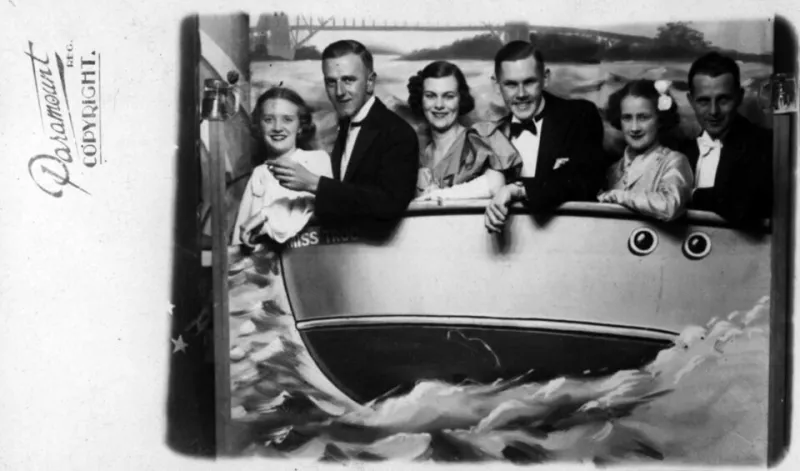
Photo: State Library of Queensland, Australia, No restrictions, via Wikimedia Commons
Here's a sentence that sounds like it was written after a long night: during World War II, the United States government seriously weighed whether famous stage illusions should be restricted as potential military secrets.
Not weapons designs. Not codebooks. Sawing a woman in half.
And the truly strange part? The reasoning wasn't entirely crazy.
When the War Department Called the Magic Circle
The logic went like this: an illusion is a technology of deception. A device that makes a 2,000-pound airplane disappear from view on a stage might, with tweaks, make something else disappear from view somewhere else. And America was about to be in the business of hiding things — airfields, factories, troop movements, entire fake armies.
So in the early 1940s, military officials started reaching out to the one group of Americans who had spent their whole careers studying misdirection: professional magicians.
Some of the era's most famous illusionists found themselves consulting for the war effort. The most celebrated case was John Mulholland, then America's foremost authority on sleight of hand, who was quietly recruited to write an illustrated manual on deception techniques for OSS operatives — the forerunner of the CIA. His instructions on how to palm pills and secretly exchange drinks read like a magic act and functioned like an espionage textbook. The manual was believed lost for decades until a copy resurfaced and was published in the 2000s.
The Disappearing Airfield Problem
The collaboration got stranger. Magicians worked on ideas for concealing airfields and equipment — techniques involving netting, paint, lighting, and carefully staged decoys. One of the most famous deception projects of the era involved building an entire dummy airfield, complete with fake planes, to draw enemy attention away from the real thing. Deception units on the battlefield later took this to astonishing extremes, using inflatable tanks and fabricated radio chatter to impersonate divisions that didn't exist.
Magicians, it turned out, understood something the military needed badly: audiences see what they expect to see. You don't hide a plane by covering it perfectly. You hide it by making sure nobody looks twice.
The Restriction Nobody Signed
Amid all this, the darker rumor took root — that officials considered asking magicians to voluntarily refrain from performing certain signature illusions for the duration of the war, on the theory that public demonstrations might leak techniques to enemy spies. Whether formal restrictions were ever drafted remains murky in the historical record, which is fitting. The paper trail, like a good trick, mostly consists of things that were almost there.
What's documented is the underlying anxiety. Illusionists of the era were, in effect, professional researchers in applied deception, publishing their findings in front of paying crowds every night. To a wartime security establishment, that was either an asset or a liability. They decided it was both.
The Trick That Wasn't Revealed
In the end, the war effort consumed the magicians' talents rather than their tricks. There was no grand ban, no list of forbidden illusions posted in theater lobbies. The partnership dissolved after the war, unpublicized, and the men who had helped the military think about hiding things went back to hiding rabbits.
But the legacy stuck around in quieter ways. The CIA's early culture of tradecraft carried fingerprints of the magic world — misdirection, props, the managed assumption. And historians who later dug into the files found themselves confronting a genuinely eerie idea: for a few years in the 1940s, the line between an evening's entertainment and a classified capability was thinner than anyone in the audience knew.
The next time you watch a magician make something vanish, remember — there was a moment in American history when the government watched the same act and took notes.