Dead Men Tell Tales: The Murder Victim Who Solved His Own Case in Court
When Science Looked Like Supernatural Justice
In the winter of 1850, Dr. George Parkman disappeared from Boston's Beacon Hill, leaving behind one of the most sensational murder cases in American history. But the truly unbelievable part wasn't the crime itself—it was how the victim seemed to rise from his grave to identify his killer in open court.
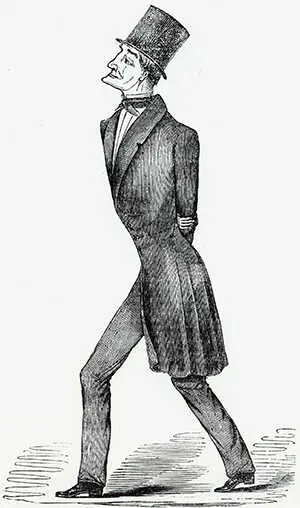 Photo: Dr. George Parkman, via www.pbs.org
Contemporary newspapers described the moment in terms that blurred the line between legal proceeding and séance. "The deceased bore witness against his murderer," wrote one journalist. "Justice spoke through the very bones of the wronged man."
It sounds like gothic fiction, but every word was literally true.
The Gentleman and the Professor
Dr. George Parkman was Boston's most recognizable figure—a wealthy landlord who walked the same route through the city every day, collecting rents from his numerous properties. His distinctive appearance—tall, thin, with prominent front teeth and a top hat—made him impossible to miss on Boston's streets.
Professor John Webster taught chemistry at Harvard Medical School and owed Parkman a substantial sum of money. The debt had become a source of increasing tension between the two men, with Parkman demanding payment and Webster unable to deliver.
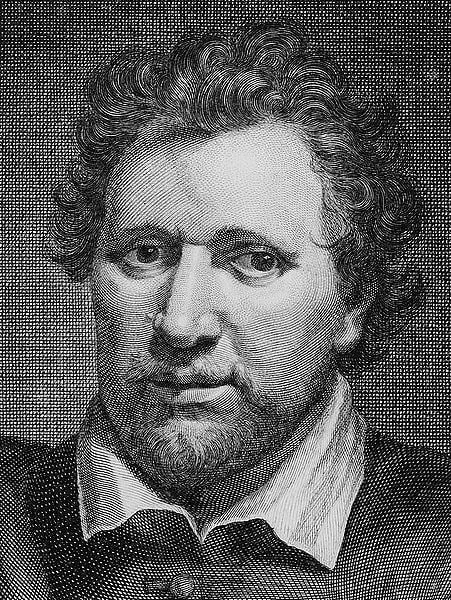 Photo: Professor John Webster, via alchetron.com
On November 23, 1850, Parkman made his usual rounds, stopping at Webster's laboratory to discuss the debt. Several witnesses saw him enter the medical school building that afternoon.
He was never seen leaving.
The Search That Found Nothing
Parkman's disappearance triggered the largest manhunt in Boston's history. Police searched the harbor, dragged ponds, and followed leads across New England. Reward posters offered $3,000—a fortune in 1850—for information about the missing man.
Webster initially claimed Parkman had visited his lab briefly, then left. He seemed helpful, even joining search efforts and expressing concern about his creditor's welfare. Police found no evidence of foul play in Webster's laboratory.
But Ephraim Littlefield, the medical school's janitor, harbored suspicions about the professor's behavior. Webster had been unusually generous lately, giving Littlefield a Thanksgiving turkey and extra money. More suspicious was Webster's habit of working alone in his laboratory at odd hours, keeping the furnace burning constantly.
The Discovery That Changed Everything
On November 30, exactly one week after Parkman's disappearance, Littlefield made a decision that would revolutionize American criminal justice. Working secretly, he began chipping through the brick wall of the laboratory's vault beneath Webster's private privy.
What he found inside defied belief: human remains that had been dismembered and partially burned, but not completely destroyed. The fragments included a pelvis, portions of a skull, and most significantly, a complete set of dentures.
Littlefield immediately contacted police, who arrested Webster and seized the remains as evidence. But proving the bones belonged to Parkman would require a type of testimony American courts had never heard before.
The Dead Man Takes the Stand
The trial of Professor John Webster began in March 1851, drawing international attention as the first American murder case to rely heavily on forensic evidence. The prosecution faced an unprecedented challenge: proving the identity of a victim whose body had been deliberately destroyed.
Their solution was to let Dr. Parkman identify himself.
Dr. Nathan Cooley Keep, Parkman's dentist, took the witness stand carrying the dentures found in Webster's laboratory. In dramatic testimony that contemporary observers described as the deceased speaking through his dental work, Dr. Keep explained how he had crafted the unusual dentures specifically for Parkman's distinctive mouth.
The dentures were unique in several ways: they were made of an uncommon mineral composition, featured an unusual spring mechanism, and had been designed to accommodate Parkman's prominent front teeth. Dr. Keep had kept detailed molds and records of the work.
Most remarkably, one of the teeth had broken during the denture's creation, and Dr. Keep had repaired it with gold. The dentures found in Webster's laboratory showed the exact same break and the identical gold repair.
Bones That Spoke Louder Than Witnesses
But the dentures were only part of Parkman's posthumous testimony. Dr. Jeffries Wyman, Harvard's professor of anatomy, analyzed the bone fragments with scientific precision that seemed almost supernatural to 1851 audiences.
Dr. Wyman demonstrated how the pelvis fragments matched Parkman's known height and build. He showed how marks on the bones indicated they had been dismembered with surgical precision—exactly the skills a Harvard chemistry professor would possess. He explained how the burning patterns on the remains matched the specific type of furnace in Webster's laboratory.
Most compelling was Dr. Wyman's analysis of the skull fragments. Using techniques that wouldn't be formalized for decades, he showed how the bone structure matched descriptions of Parkman's distinctive facial features.
To observers in the courtroom, it seemed as if the victim was methodically building a case against his killer from beyond the grave.
The Precedent That Outlived the Trial
The jury convicted Webster after deliberating for just three hours. He was executed in August 1850, but the legal precedent established by Parkman's "testimony" proved far more enduring than the professor's life.
The case established several principles that remain fundamental to American forensic law today. It demonstrated that physical evidence could be more reliable than eyewitness testimony. It showed how scientific analysis could give voice to silent victims. It proved that expert witnesses could help juries understand complex technical evidence.
Most significantly, it established the legal concept that physical remains could "testify" on their own behalf through scientific analysis—a principle that underlies every modern forensic investigation.
When Truth Surpassed Fiction
The Webster-Parkman case occurred during the golden age of Gothic literature, when authors like Edgar Allan Poe were writing stories about the dead returning to accuse their killers. The parallels weren't lost on contemporary observers, who noted that reality had produced a more compelling narrative than any novelist could imagine.
But unlike Poe's supernatural tales, Parkman's posthumous testimony relied entirely on scientific evidence and logical deduction. The "voice from beyond" was actually the voice of emerging forensic science, speaking through dental records, bone analysis, and careful observation.
The case demonstrated something that would become a cornerstone of modern criminal justice: sometimes the most reliable witness to a murder is the victim themselves, speaking through the evidence left on their remains.
The Legacy of Scientific Justice
Today, forensic pathologists routinely help murder victims "testify" through DNA analysis, ballistics evidence, and sophisticated bone examination. What seemed supernatural in 1851 is now standard procedure in courtrooms across America.
But the Webster-Parkman case remains unique in legal history—the moment when American justice discovered that the dead could indeed speak, if you knew how to listen. The precedent established by Dr. Parkman's posthumous testimony continues to help solve murders more than 170 years later.
It's a reminder that sometimes the most unbelievable true stories are the ones that change everything that comes after them.