The Invisible Apocalypse: How a Distant Volcano Secretly Destroyed American Summers for Two Years
When Summer Disappeared and Nobody Knew Why
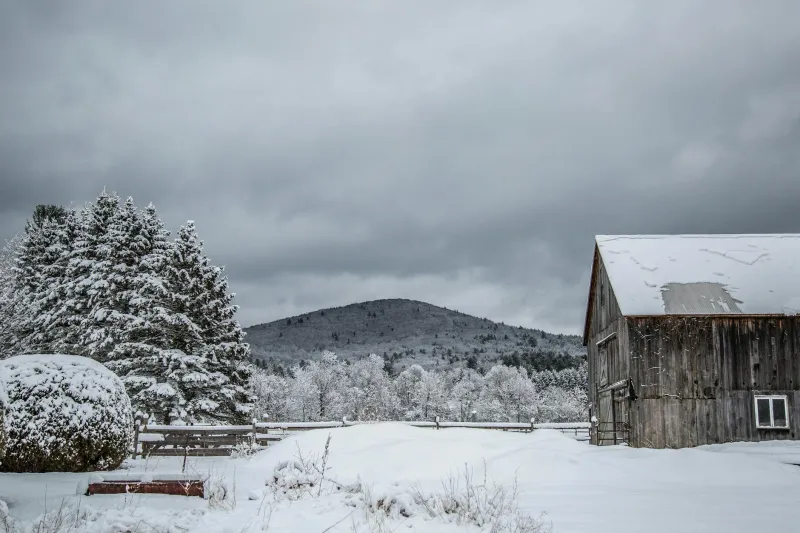
On July 6, 1816, something impossible happened in rural Connecticut: snow began falling. Not a light dusting, but genuine, accumulating snow that covered gardens, killed crops, and left farmers staring at their calendars in disbelief. Across New England, temperatures plummeted to near-freezing levels while families huddled around fires in the middle of summer.
What made this weather catastrophe truly eerie wasn't just its severity — it was the complete mystery surrounding its cause. Americans in 1816 had no idea that a volcanic eruption on the other side of the planet had quietly declared war on their climate. For two years, an entire nation would suffer through the consequences of a disaster they couldn't see, understand, or even imagine.
The Eruption That Shook the World (Silently)
Fourteen months earlier, on April 10, 1815, Mount Tambora in the Dutch East Indies (modern-day Indonesia) had exploded with the force of several nuclear weapons. The eruption was so violent that it could be heard 1,200 miles away. Ash and debris shot 28 miles into the atmosphere, creating a massive cloud that began circling the globe.
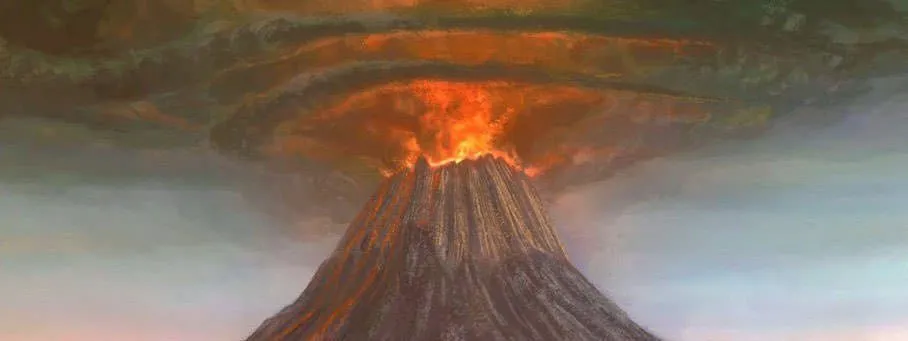 Photo: Mount Tambora, via learnodo-newtonic.com
But here's the thing: in 1815, news traveled at the speed of sailing ships. Even if someone in Indonesia had managed to send word about the eruption, it would have taken months to reach American shores. By the time scattered reports of a distant volcanic disaster trickled into American newspapers, the climate chaos had already begun.
More importantly, nobody in 1816 understood how volcanoes could affect global weather. The idea that an eruption in Asia could cause snowstorms in Vermont was beyond the scientific knowledge of the era. Americans experiencing the bizarre weather had no framework for connecting their local catastrophe to events on the other side of the planet.
When Nature Turned Upside Down
The summer of 1816 didn't just bring unexpected snow — it unleashed a cascade of impossible weather that left Americans questioning the very nature of reality. Killing frosts struck in June. Ice formed on ponds in July. August brought more snow to higher elevations across New England and upstate New York.
Farmers watched helplessly as corn crops withered in fields that should have been thriving. Wheat harvests failed across the Northeast. Vegetable gardens that had fed families for generations suddenly couldn't produce enough food to last through winter. The agricultural calendar that had governed American life for two centuries simply stopped making sense.
The cold wasn't just uncomfortable — it was economically devastating. Food prices skyrocketed as crop failures cascaded across the region. Oats became so scarce that horses starved. Families that had never known hunger found themselves rationing grain like wartime refugees.
America Searches for Explanations
Without any knowledge of Tambora's eruption, Americans desperately sought explanations for the climate nightmare engulfing their country. The theories they developed reveal a fascinating glimpse into how pre-scientific societies try to make sense of inexplicable disasters.
Religious leaders proclaimed the weather chaos as divine punishment for America's sins. Preachers pointed to everything from slavery to westward expansion as potential causes of God's wrath. Some suggested the unusual cold represented a biblical warning about the approaching end times.
Scientists and educated observers proposed more secular explanations that seem almost quaint today. Some blamed sunspot activity, noting unusual patterns of solar radiation. Others suggested that Benjamin Franklin's lightning rod experiments had somehow disrupted the natural electrical balance of the atmosphere.
A few theorists developed elaborate conspiracy theories involving secret government weather manipulation or foreign sabotage. One popular explanation claimed that the War of 1812 had somehow "broken" America's climate through excessive cannon fire and gunpowder explosions.
The Great Migration Nobody Expected
The failed harvests of 1816 triggered one of the largest internal migrations in early American history — and nobody realized a volcano was driving it. Thousands of New England families, facing the prospect of starvation, abandoned their farms and headed west toward Ohio, Indiana, and Illinois.
These climate refugees didn't know they were fleeing volcanic winter. They simply knew that their traditional way of life had become impossible. Entire communities in Vermont and New Hampshire emptied out as families loaded wagons with whatever possessions they could carry and struck out for supposedly more reliable farmland.
The irony is staggering: a volcanic eruption in Indonesia was reshaping American demographics, accelerating westward expansion, and altering the development of the frontier — all without a single American realizing the connection.
When the Mystery Finally Unraveled
It would take decades before scientists began connecting the dots between Tambora's eruption and the climate disasters that followed. Even then, the link remained controversial well into the 20th century.
The breakthrough came gradually as researchers studying volcanic eruptions began noticing patterns between major explosions and subsequent weather anomalies. The 1883 eruption of Krakatoa provided crucial evidence when similar (though less severe) climate effects followed a well-documented volcanic disaster.
By the early 1900s, scientists had developed theories about how volcanic ash and sulfur dioxide could create global cooling by blocking sunlight. But it wasn't until the 1960s that detailed atmospheric studies finally proved how Tambora's eruption had triggered the "Year Without a Summer."
The Eerie Lesson of Invisible Catastrophe
The Tambora climate disaster reveals something deeply unsettling about the interconnected nature of our planet. A single geological event in a remote corner of the world had quietly reshaped American agriculture, demographics, and even religious beliefs — all while remaining completely invisible to its victims.
This invisible catastrophe offers a chilling preview of how global systems can impact local communities in ways that remain hidden until it's too late. Americans in 1816 experienced the consequences of climate change decades before they could even conceive of the cause.
Perhaps most eerily, the Tambora story demonstrates how humans instinctively create explanations for inexplicable disasters, even when those explanations are completely wrong. Faced with impossible weather, Americans invented elaborate theories about divine punishment, atmospheric electricity, and government conspiracy rather than accept that they simply didn't understand what was happening.
In our own era of global climate systems and interconnected environmental disasters, the ghost of Tambora serves as a reminder that the most dangerous catastrophes are often the ones we can't see coming — or the ones we're experiencing right now without realizing their true cause.