The Song That Wouldn't Die: How a Forgotten Tune Collected Royalties for 140 Years
The Little Song That Could
"Sweet Evening Bells" was never meant to be immortal. When Heinrich Zimmermann's small Cincinnati publishing house copyrighted the modest parlor song in 1883, he was hoping to sell maybe a few hundred copies to middle-class families with parlor pianos. The composition itself was unremarkable—a simple melody with sentimental lyrics about church bells calling people home for dinner. Yet somehow, this forgettable tune managed to outlive the Civil War generation, two World Wars, the rise and fall of the music industry as Zimmermann knew it, and every single person who had anything to do with its creation.
By the time the copyright finally expired in 2023, "Sweet Evening Bells" had been quietly collecting royalties for 140 years, making it one of the longest-lived copyrights in American history.
A Simple Beginning
Zimmermann's publishing operation was typical of small-town music businesses in the 1880s. He printed sheet music for local composers, sold instruments, and occasionally published songs he thought might have broader appeal. "Sweet Evening Bells," composed by a local church organist named Margaret Walsh, seemed like a safe bet for the parlor music market that was booming among America's growing middle class.
The song sold modestly—about 300 copies in its first year—and Zimmermann filed the required copyright paperwork with the U.S. Copyright Office in Washington. Under 1883 law, the copyright would last for 28 years, with the possibility of a 28-year renewal if someone bothered to file the paperwork. Zimmermann probably expected the song to fade into obscurity long before the copyright expired in 1911.
What he couldn't have predicted was that "Sweet Evening Bells" was about to become accidentally immortal.
The Corporate Carousel Begins
When Zimmermann died in 1895, his small catalog was purchased by Midwest Music Publishers, a larger Cincinnati firm looking to expand their holdings. The sale included "Sweet Evening Bells" along with dozens of other minor compositions. Midwest's owner, Samuel Richardson, dutifully renewed the copyright in 1911, more out of habit than expectation of profit.
Richardson's death in 1923 triggered the first of many corporate transfers that would keep "Sweet Evening Bells" alive far beyond any reasonable expectation. Midwest Music was acquired by Great Lakes Publishing, which was subsequently bought by National Sheet Music Company in 1931. Each transfer included the full catalog, and each new owner inherited the legal obligation to maintain existing copyrights.
The Legal Loophole That Changed Everything
The Copyright Act of 1976 was supposed to simplify American intellectual property law. Instead, it created a massive loophole that trapped "Sweet Evening Bells" in legal amber. The new law extended copyright terms significantly, but it also included a provision that any work "in continuous commercial exploitation" could qualify for extended protection under certain circumstances.
By 1976, "Sweet Evening Bells" was owned by Harmony Music Group, a subsidiary of a subsidiary of what had once been National Sheet Music Company. The song hadn't been printed in decades, but it was still listed in Harmony's catalog, and the company was still receiving occasional royalty payments from radio stations that played historical music programming. Under the 1976 law's complex provisions, these minimal royalties qualified as "continuous commercial exploitation."
Harmony's lawyers, reviewing thousands of copyrights during the transition to the new law, filed for extended protection on everything in their catalog. "Sweet Evening Bells" got swept up with more valuable properties, and nobody bothered to question whether a song that earned maybe $50 per year deserved the same protection as major hits.
The Digital Age Windfall
The real money started flowing in the 1990s, when digital music services began paying licensing fees for vast catalogs of historical recordings. "Sweet Evening Bells" had been recorded dozens of times over the decades—by church choirs, historical music societies, and amateur musicians who uploaded performances to early streaming platforms. Each use generated small royalty payments that automatically flowed to whoever owned the copyright.
By this time, the song was owned by Heritage Rights Management, a company that specialized in managing old copyrights for institutional investors. Heritage had acquired thousands of minor copyrights as part of larger portfolio deals, and their automated systems dutifully collected and distributed royalties without anyone examining individual songs.
"Sweet Evening Bells" was earning about $3,000 per year by 2010—not enough to attract attention, but enough to keep the copyright economically viable under U.S. law.
The Discovery
The song's remarkable survival only came to light in 2019, when music researcher Dr. Amanda Foster was studying copyright duration for her book on 19th-century American popular music. Foster was trying to find the oldest continuously held copyright in U.S. history when she stumbled across "Sweet Evening Bells" in Heritage Rights Management's public filings.
"I couldn't believe what I was seeing," Foster later wrote. "Here was a song that nobody remembered, by a composer nobody had heard of, still generating income 136 years after it was written. It was like finding a Model T Ford still making monthly car payments."
Foster's research revealed that "Sweet Evening Bells" had survived through pure institutional inertia. Each corporate transfer had included the song as part of larger catalog deals, and each new owner had maintained the copyright simply because their legal systems were designed to protect all intellectual property, regardless of value.
The End of an Era
When Foster published her findings, Heritage Rights Management faced an unusual decision: spend money to extend the copyright further, or let "Sweet Evening Bells" finally enter the public domain. The company's analysis showed that the song was earning just enough to cover the administrative costs of maintaining the copyright, making it essentially break-even.
In a move that surprised copyright scholars, Heritage decided to let the copyright expire in 2023, ending "Sweet Evening Bells'" 140-year commercial life. The company issued a press release calling the song "a remarkable example of how intellectual property law can preserve cultural artifacts in unexpected ways."
What It All Means
The story of "Sweet Evening Bells" reveals how American copyright law has evolved from a simple system designed to protect authors into a complex mechanism that can accidentally preserve forgotten works for far longer than anyone intended. The song's survival wasn't the result of any conscious decision—it was the byproduct of corporate mergers, legal changes, and automated systems that treated a minor 1883 parlor song the same way they treated major commercial properties.
Today, "Sweet Evening Bells" is finally free for anyone to perform, record, or arrange without paying royalties. Margaret Walsh's simple composition about church bells calling people home has itself come home, joining the vast catalog of American music that belongs to everyone.
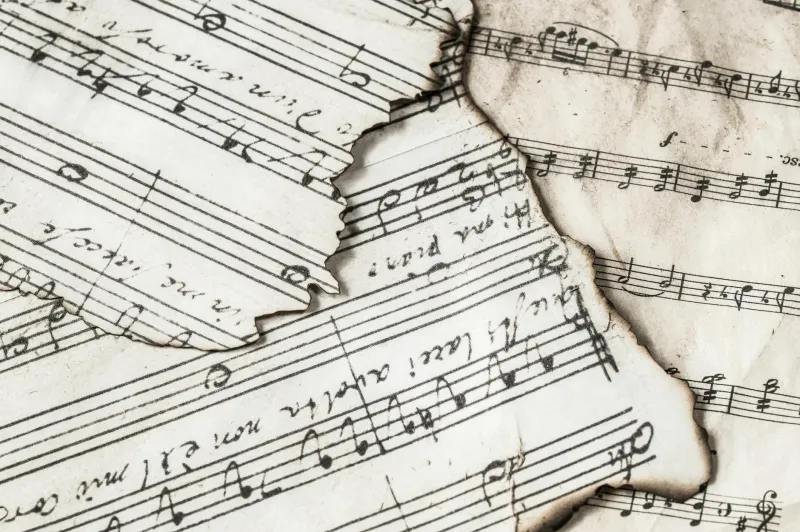
The original sheet music, with Heinrich Zimmermann's publisher's mark, is preserved in the Cincinnati History Library. Visitors can still see the faded notation for a song that somehow managed to outlive everyone who ever heard it played in a Victorian parlor, becoming one of the most accidentally successful copyrights in American history.