The Village Where Everyone Fell Asleep: Kazakhstan's Real-Life Sleeping Beauty Mystery
When Sleep Becomes an Epidemic
Imagine waking up to find your neighbor unconscious in their garden, your postal worker collapsed on your doorstep, and half the children in the local school slumped over their desks in an unnatural sleep. This wasn't a scene from a fairy tale—it was everyday reality in Kalachi, Kazakhstan, starting in March 2010.
The small village of about 680 residents began experiencing something that defied medical explanation: mass episodes of sudden, prolonged unconsciousness that doctors couldn't wake people from, couldn't predict, and couldn't cure.
The First Mysterious Episodes
The phenomenon began gradually. In March 2010, eight residents of Kalachi fell into inexplicable sleeps lasting between two and six days. They weren't in comas—their vital signs remained stable, and they showed signs of dreaming—but they simply couldn't be roused.
Local doctors were baffled. Blood tests came back normal. Brain scans showed no abnormalities. The affected residents ranged in age from a 7-year-old girl to an 87-year-old man, with no apparent common factors in their health, diet, or daily routines.
When the sleepers finally woke up, they reported vivid, often disturbing dreams, but had no memory of falling asleep or any awareness of the passage of time. Most disturbingly, many complained of hallucinations and disorientation that lasted for days after awakening.
The Pattern Emerges
Over the following months, the episodes became more frequent and more widespread. Sometimes only one or two people would fall into the mysterious sleep. Other times, dozens would collapse simultaneously across the village.
The pattern was deeply unsettling. People would fall asleep mid-conversation, while walking down the street, or while working. Children would collapse at their school desks. Adults would be found unconscious in their shops or gardens. The episodes seemed to strike randomly, with no warning signs or obvious triggers.
By December 2010, over 150 residents had experienced at least one episode of the mysterious sleep. The village was in a state of constant anxiety, never knowing who would be next or when the next wave would hit.
Scientists Descend on Kalachi
The Kazakh government, initially skeptical, could no longer ignore what was happening in Kalachi. Teams of scientists, doctors, and researchers from across the former Soviet Union descended on the village to investigate.
Their theories ranged from the plausible to the bizarre. Some suspected viral encephalitis, others pointed to psychological mass hysteria. Environmental scientists tested the water supply, the air quality, and the soil. Neurologists conducted extensive brain scans. Psychiatrists interviewed residents about stress and trauma.
Everything came back normal. The village's water was clean. The air quality was within acceptable ranges. Blood tests showed no signs of infection, poisoning, or neurological disease. The sleeping sickness remained a complete mystery.
The Episodes Intensify
As 2011 progressed, the episodes became more severe and more frequent. In one particularly frightening incident in April, 60 residents—nearly 10% of the village—fell into simultaneous sleep during a single afternoon. The local clinic was overwhelmed with unconscious patients who couldn't be awakened.
Residents began leaving Kalachi in droves. Families packed up their belongings and moved to neighboring villages, unwilling to risk being caught in the next wave of mysterious sleep. The local school closed when too many children were affected. Businesses shuttered as owners and customers alike fell victim to the inexplicable condition.
By mid-2011, Kalachi had become a ghost town, with fewer than 300 residents remaining.
International Attention and Wild Theories
The story of Kalachi began attracting international media attention. Journalists from around the world traveled to Kazakhstan to witness the "sleeping sickness" firsthand. The coverage brought a flood of theories from armchair experts and conspiracy theorists.
Some blamed secret Soviet-era chemical weapons testing. Others suggested electromagnetic radiation from nearby radio towers. A few pointed to contamination from a nearby uranium mine that had been abandoned decades earlier. Religious groups declared it a sign of the apocalypse. UFO enthusiasts claimed alien involvement.
Meanwhile, the residents who remained in Kalachi continued to fall into unexplained sleeps, sometimes for days at a time.
The Breakthrough Discovery
It wasn't until 2013 that scientists finally identified the culprit—and it turned out to be stranger than most of the conspiracy theories.
The abandoned uranium mine near Kalachi had been slowly leaking carbon monoxide gas into the surrounding area for decades. The gas was seeping up through the ground and accumulating in low-lying areas of the village, particularly during certain weather conditions.
Carbon monoxide poisoning typically causes headaches, nausea, and eventually death. But at very specific concentrations—levels that varied based on wind patterns, temperature, and atmospheric pressure—the gas was causing a unique neurological effect: prolonged, coma-like sleep.
The intermittent nature of the episodes was explained by the gas levels fluctuating based on weather conditions. When atmospheric pressure was high and winds were calm, carbon monoxide would accumulate to dangerous levels. When weather patterns shifted, the gas would disperse, allowing people to wake up.
The Evacuation
Once the source was identified, the Kazakh government ordered the immediate evacuation of Kalachi. The remaining residents were relocated to a new village built specifically for them, far from the contaminated area.
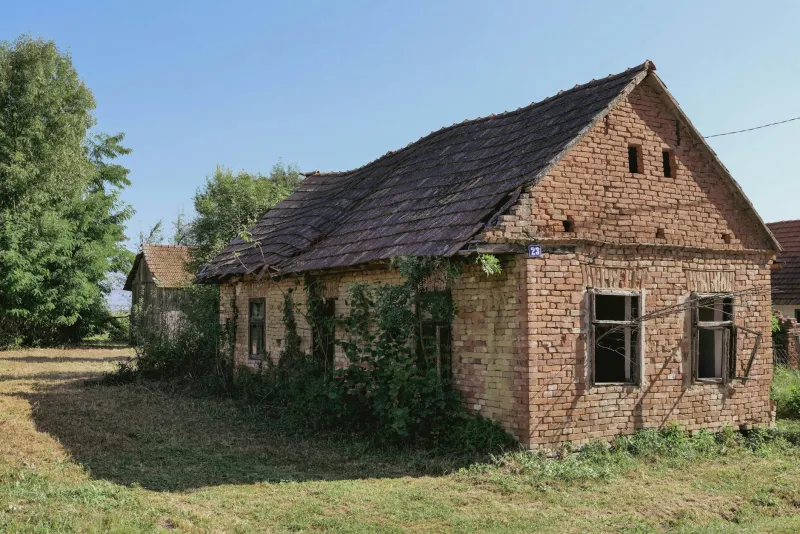
The abandoned uranium mine was sealed, and the area around Kalachi was declared uninhabitable. What had once been a thriving agricultural village became a literal ghost town, its buildings standing empty as monuments to one of the strangest mass medical mysteries of the modern era.
When Science Stranger Than Fiction
The story of Kalachi reads like something from a science fiction novel—an entire village falling into mysterious, prolonged sleeps with no apparent cause. For three years, it baffled some of the world's best scientists and doctors.
The reality turned out to be both more mundane and more terrifying than any supernatural explanation. A slow industrial leak, invisible and odorless, had been slowly poisoning an entire community for years. The fact that it caused sleep rather than death was purely coincidental—a quirk of chemistry and concentration that created one of the most bizarre public health crises in modern history.
Today, Kalachi stands empty, a reminder that sometimes the most unbelievable stories have the most believable explanations—we just have to be patient enough to find them.