The Holy City That Accidentally Became Sin City: When Zion's Prohibition Laws Vanished Overnight
The residents of Zion, Illinois had spent decades proudly calling their community "the Holy City." Founded in 1901 by religious leader John Alexander Dowie as a utopian Christian settlement, Zion had maintained America's most rigorous alcohol prohibition for over fifty years. No bars, no liquor stores, no beer at baseball games — not even cooking wine was permitted within city limits. Then, on one ordinary Tuesday in 1952, everything changed with the discovery of a single misfiled document.
The Prophet's Perfect Plan
John Alexander Dowie had envisioned Zion as nothing less than a new Jerusalem on the shores of Lake Michigan. The Scottish-born preacher purchased 6,500 acres of Illinois farmland and designed a city where Christian principles would govern every aspect of daily life. Alcohol was banned absolutely, along with tobacco, pork, oysters, and even medical doctors (Dowie believed faith healing rendered medicine unnecessary).
The prohibition wasn't just a city ordinance — it was supposedly written into the very foundation of Zion's existence. Every property deed contained restrictive covenants forbidding alcohol sales or consumption. Every business license included temperance clauses. The city's charter, filed with the state of Illinois, explicitly prohibited "the manufacture, sale, or consumption of alcoholic beverages within the municipal boundaries."
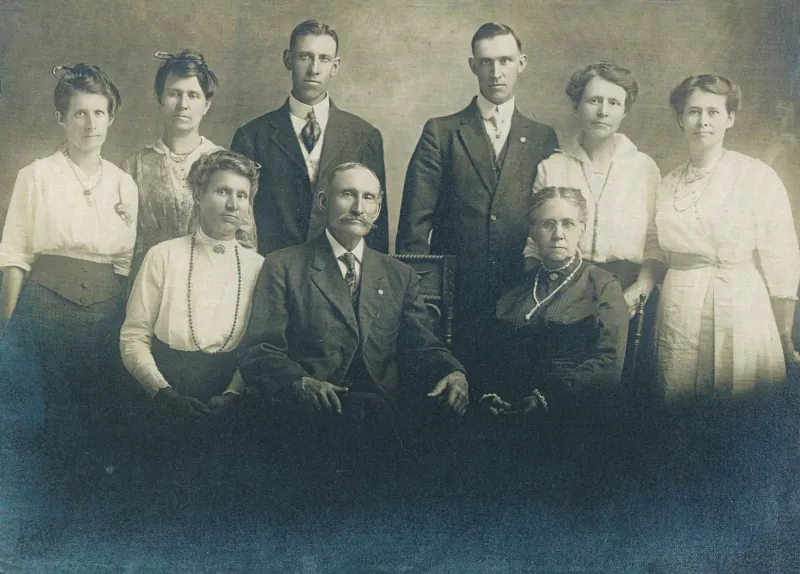
For five decades, this system worked exactly as Dowie intended. Zion became a beacon of temperance, attracting religious families from across the Midwest who wanted to raise their children in an alcohol-free environment. The community policed itself with religious fervor, reporting neighbors who might be hiding bottles and celebrating their moral superiority over the sin-soaked cities surrounding them.
The Lawyer Who Asked Too Many Questions
The unraveling began when a Chicago attorney named Harold Morrison was hired to handle a routine property dispute in Zion. Morrison was representing a client who wanted to open a small restaurant, but city officials had denied the business license, citing concerns that the establishment might eventually serve alcohol.
Morrison decided to examine the legal foundation of Zion's prohibition more closely. What he discovered in the Cook County Courthouse archives would have made John Alexander Dowie roll over in his grave: the city's alcohol ban had never been properly incorporated into state law.
Dowie's original incorporation papers, filed with Illinois in 1902, contained a crucial error. The temperance provisions had been included in a preliminary draft, but the final version submitted to the state somehow omitted the alcohol prohibition entirely. For fifty years, Zion had been enforcing a ban that existed only in local tradition and the collective memory of its residents.
The Day the Holy City Fell
Morrison's revelation created immediate legal chaos. If the alcohol ban had never been legally valid, then every enforcement action, every denied business license, every confiscated bottle had been an illegal abuse of municipal power. Worse yet, the restrictive covenants in property deeds were legally meaningless if they referenced a prohibition that didn't exist in the city's actual charter.
News of the discovery spread through Zion like wildfire. Within hours of Morrison's court filing, entrepreneurs from surrounding communities were making phone calls about opening bars and liquor stores. Real estate speculators began calculating the value of prime commercial lots that had been artificially suppressed by the alcohol ban.
The city council called an emergency meeting, but there was nothing they could do. You can't enforce a law that was never actually passed, no matter how fervently your community believed in it.
From Temperance to Taverns in Record Time
What happened next was both predictable and shocking in its speed. Within six months of Morrison's court ruling, Zion had transformed from America's most alcohol-free city into something resembling a frontier boom town.
The first bar opened just three blocks from the site of Dowie's original tabernacle. Then came the liquor stores, the beer distributors, and the taverns. Entrepreneurs who had been barred from Zion for decades suddenly found themselves with prime real estate opportunities in a community that had artificially restricted competition for half a century.
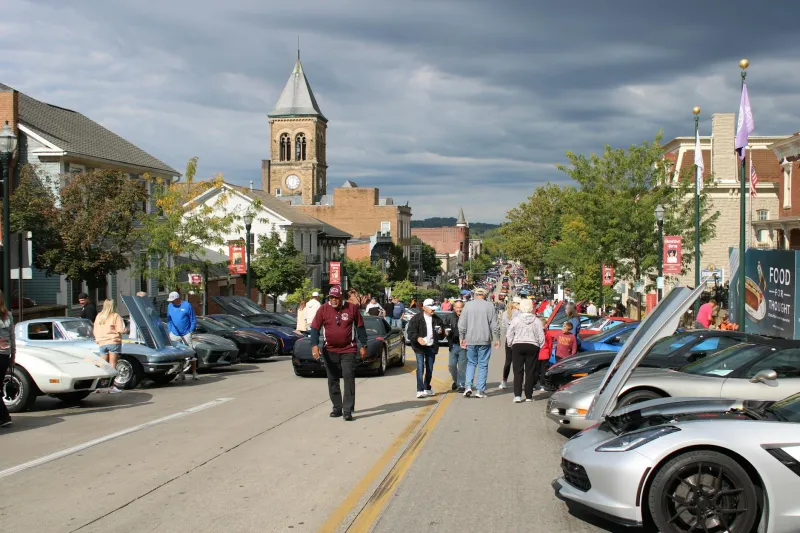
Long-time residents watched in horror as their holy city sprouted neon beer signs and cocktail lounges. Property values fluctuated wildly as the community struggled to redefine its identity. Some families, whose entire reason for living in Zion had been the alcohol-free environment, packed up and moved to other temperance communities.
The Identity Crisis That Never Ended
The most eerie aspect of Zion's transformation wasn't the sudden appearance of bars — it was watching a community grapple with the realization that their fundamental identity had been built on a legal fiction. For fifty years, residents had defined themselves in opposition to alcohol, had raised their children to view temperance as a sacred duty, had structured their entire social order around prohibition.
Now they discovered that their moral superiority had been based on nothing more than a filing error and collective delusion. The city that had once proudly proclaimed itself "alcohol-free since 1901" suddenly had to confront the fact that it had never been alcohol-free at all — just alcohol-less by choice and intimidation.
The Lingering Questions
Even today, historians and legal scholars debate how such a fundamental oversight could have persisted for five decades. How did multiple city attorneys, state inspectors, and court officials fail to notice that Zion's most defining characteristic had no legal foundation? How did a community of thousands collectively maintain a prohibition that existed only in their shared imagination?
The answer seems to lie in the power of collective belief. When an entire community agrees that something is true, the actual legal reality becomes almost irrelevant — until someone with a law degree starts asking uncomfortable questions.
Zion, Illinois still exists today, though it bears little resemblance to Dowie's utopian vision. The city has bars, liquor stores, and all the trappings of normal municipal life. But somewhere in the city archives, filed away with other historical curiosities, sits the paperwork that proves sometimes the most sacred laws are nothing more than very convincing mistakes.