The Maine Town That Forgot to Rejoin America After the War
Photo: ajay_suresh, CC BY 4.0, via Wikimedia Commons
Most towns that get occupied during wartime can't wait to be liberated. There are celebrations, flag-raisings, speeches. People cry. People cheer. History gets made.
Eastport, Maine took a different approach. When the War of 1812 wrapped up and the rest of the country started putting itself back together, Eastport just... kept going. Paying taxes to Britain. Trading with both sides. Living its life. Nobody in town seemed particularly alarmed by the situation, and for a while, nobody in Washington seemed to notice. The result was one of the most quietly bizarre episodes in American history — a town that accidentally opted out of its own country's peace settlement through what can only be described as spectacular bureaucratic indifference.
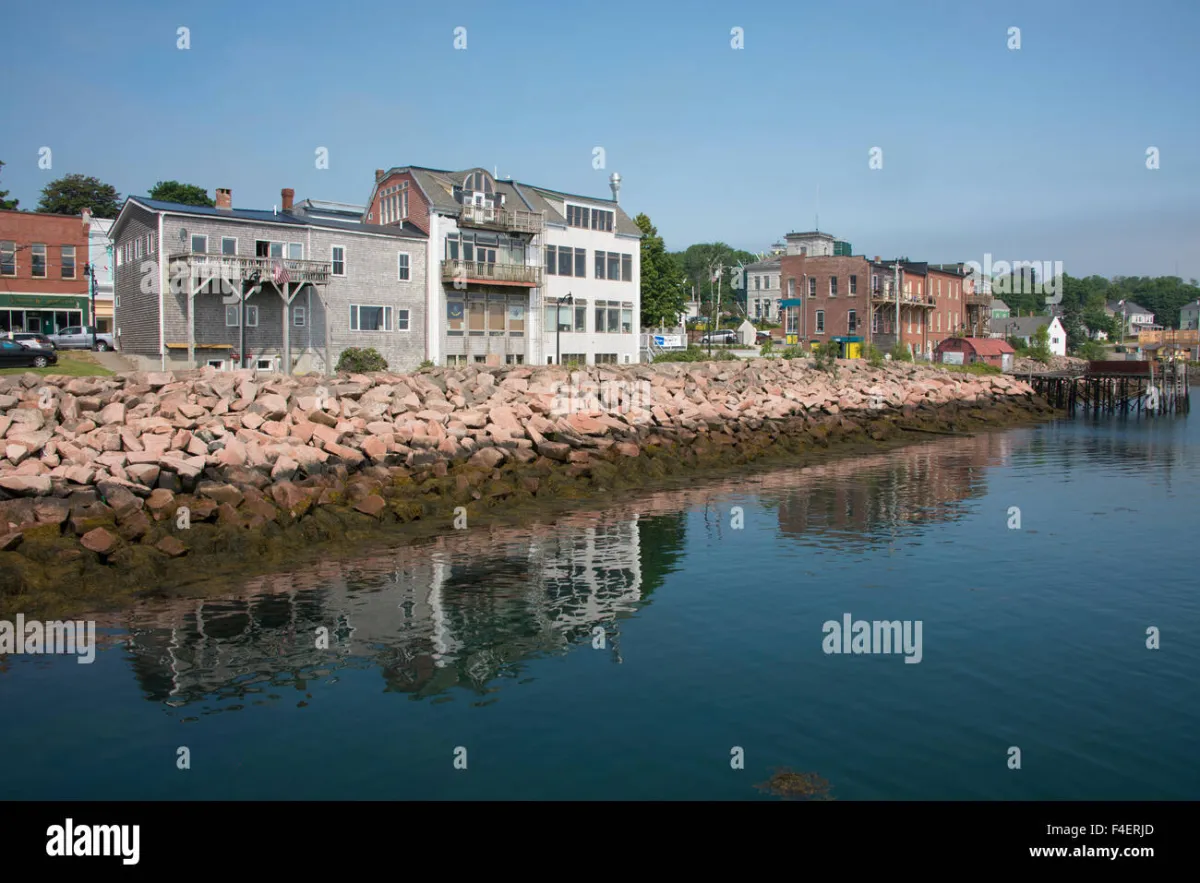 Photo: Eastport, Maine, via c8.alamy.com
A Town Worth Taking
To understand how this happened, you need to understand where Eastport sits. Perched on Moose Island at the far northeastern tip of Maine, Eastport is almost absurdly remote. In the early 19th century, it was a bustling little port town — one of the busiest on the entire eastern seaboard, actually, thanks to its position near the profitable fishing grounds and trade routes of the Bay of Fundy. It was also, geographically, almost more Canadian than American.
 Photo: Bay of Fundy, via s.hdnux.com
When the War of 1812 broke out, Eastport's location made it an obvious target. British forces moved in during the summer of 1814 and took control of the town with minimal resistance. This wasn't exactly a heroic stand. The local militia was small, the British fleet was not, and the residents of Eastport were, by and large, practical people who did a lot of business with their neighbors across the border. An occupation was inconvenient. A bloodbath was worse. They let the British in.
What followed was, by most accounts, a remarkably civil occupation. The British didn't burn anything down or terrorize the population. They administered the town, collected customs duties, and let the locals go about their business. Eastport, for its part, adapted. Merchants continued trading. Fishermen continued fishing. Life went on, just with a different flag flying over the harbor.
Peace Arrived Everywhere Except Here
The Treaty of Ghent, signed on December 24, 1814, officially ended the War of 1812. Under its terms, all occupied territories were to be returned to their pre-war status. Both sides shook hands — metaphorically speaking — and started the process of unwinding three years of conflict.
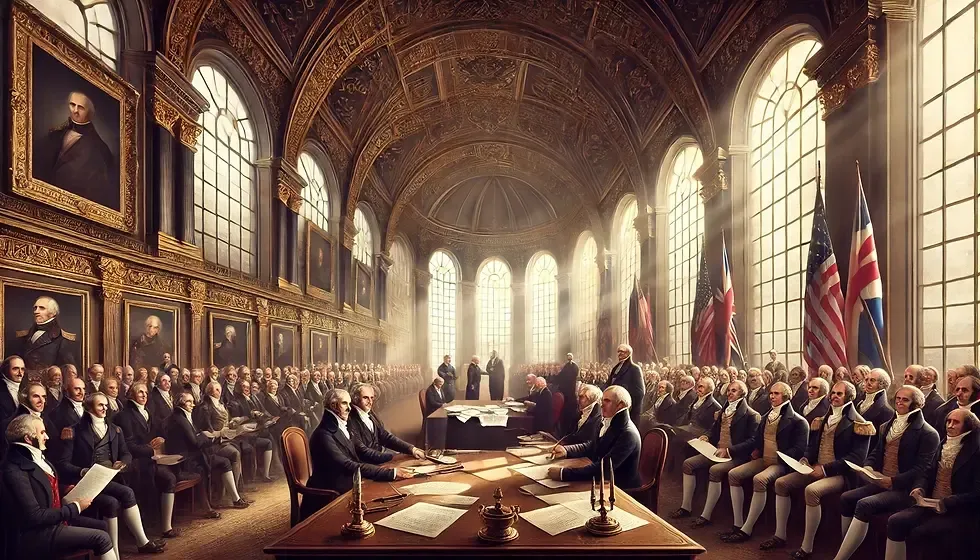 Photo: Treaty of Ghent, via static.wixstatic.com
Except in Eastport.
The treaty required the formal transfer of occupied territories through a specific administrative process. Documents needed to be signed. Officials needed to be notified. Orders needed to be issued and received. And somewhere in that chain of paperwork, Eastport fell through the cracks. The British forces in the area weren't immediately ordered to withdraw. American officials didn't immediately press the issue. And the residents of Eastport, who had been managing just fine under British administration and had ongoing trade relationships with New Brunswick and Nova Scotia that they had no particular desire to disrupt, weren't exactly lobbying hard for urgent resolution.
So the occupation continued. Months passed. Then more months. By the time anyone in Washington started asking serious questions, Eastport had been technically under British military administration for the better part of a year after the peace treaty had been signed.
Paying Taxes to Two Governments
The practical reality of Eastport's situation during this period was genuinely strange. Residents were, in some cases, navigating dual obligations — paying duties and fees to British customs officials while also maintaining their nominal status as American citizens. Merchants who traded across the border operated in an environment where the rules were, to put it generously, unclear. The town existed in a kind of sovereign fog, officially American by treaty but functionally British by administration.
The British, for their part, didn't seem to be in a tremendous hurry to leave. Eastport was a valuable port. The customs revenue was useful. And since no one was making a very loud fuss, there wasn't an obvious reason to rush.
It wasn't until a bureaucratic review — the kind of tedious administrative audit that occasionally catches things that urgency misses — flagged the anomaly that the situation finally got serious attention. Officials in Washington, apparently startled to discover that a piece of American territory was still being administered by a foreign military government nearly three years after the war had ended, scrambled to resolve the matter.
The Quiet Resolution
British forces finally withdrew from Eastport in 1818 — nearly three years after the Treaty of Ghent had, on paper, returned the town to American sovereignty. The handover was formal and dignified. There were no dramatic confrontations, no lingering resentments, no particularly memorable ceremony. The British left, the Americans resumed full administrative control, and Eastport went back to being a regular American port town.
What's remarkable about the whole episode isn't the occupation itself — occupations happen in wartime. What's remarkable is the aftermath. A peace treaty was signed, a war was declared over, and an entire American town simply wasn't included in the resolution for three years, largely because nobody pushed hard enough to make it happen. The residents adapted. The merchants improvised. The paperwork sat somewhere, unprocessed.
The Most American Story That Isn't Really About America
There's something deeply human about Eastport's experience during those three ambiguous years. The town didn't resist. It didn't protest. It didn't demand liberation with righteous fury. It just kept going, paying whoever needed to be paid and trading with whoever wanted to trade, waiting for the governments involved to sort out their paperwork.
In a strange way, Eastport's story is less about war and more about what happens when ordinary life refuses to pause for geopolitics. The fishermen still needed to fish. The merchants still needed to sell. The harbor didn't care which flag was flying.
And somewhere in a government office, for nearly three years, a piece of paper that should have brought a town home sat in a drawer, waiting for someone to notice.