The Man Who Died Rich and Nobody Knew: A Fortune Locked Away for Four Decades
The Neighbor Who Didn't Seem Like Much
There's a particular kind of person who slips through life without drawing much attention — the guy who eats at the same diner every Tuesday, drives a car that's one year away from the junkyard, and haggles over the cost of a haircut. Neighbors wave. Nobody asks questions. And when he dies, the assumption is that there won't be much of an estate to speak of.
That assumption, in a handful of documented cases that have wound through American probate courts, has turned out to be spectacularly wrong.
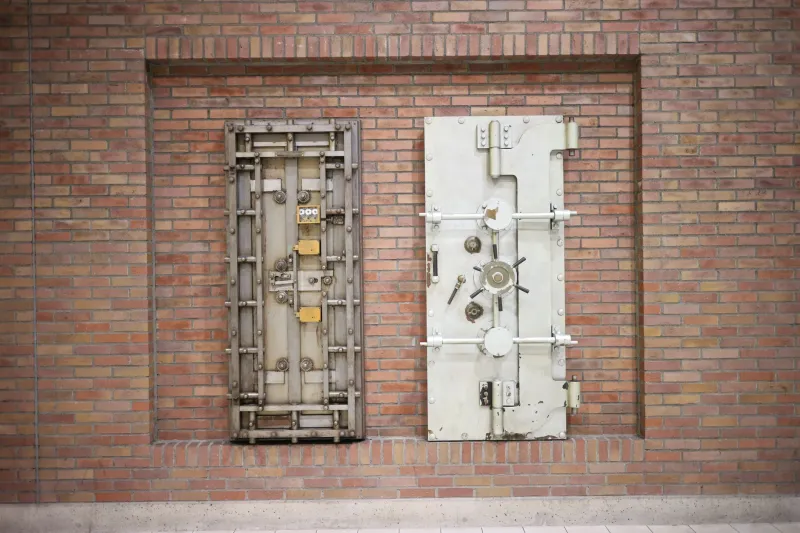
The most striking of these involves a man — identified in legal records and investigative reporting under his initials or with names changed for privacy — who spent the better part of four decades accumulating a significant fortune and then doing something almost no one does with significant fortunes: absolutely nothing with it. He didn't invest it in ways that showed. He didn't spend it. He didn't tell his children, his siblings, or the accountant who filed his modest annual tax returns. He put it in a safety deposit box at a regional bank and let it sit there like a secret he intended to take with him.
He almost did.
How a Fortune Disappears in Plain Sight
The mechanics of hiding money — really hiding it, from everyone — are more straightforward than you might expect, particularly for someone who came of age in the mid-20th century, before digital banking records made financial privacy nearly impossible.
Cash accumulated over decades of work in businesses that dealt heavily in physical transactions doesn't automatically generate a paper trail. A person who is disciplined about what they deposit, careful about what they report, and deeply, almost pathologically private about their financial life can, over time, build up a sum that exists almost entirely outside the visible economy.
This particular man did exactly that. According to probate records and reporting from regional newspapers that covered the case when it finally surfaced, the safety deposit box — rented under his name at a bank in his home state — contained a combination of cash, bonds, and documents related to assets that had been quietly held and never disclosed. The total, once estate attorneys finished their accounting, ran into the millions.
His family had no idea. His children, who had occasionally helped him with errands in his later years, described a man who complained about grocery prices and kept his thermostat low in winter. His lifestyle was so consistently modest that even people who knew him well had no reason to look for a second story.
The Box That Changed Everything
When he died — quietly, at home, in his late eighties — the process of settling his estate began the way it does for most people without obvious wealth: quickly, and without much fanfare. There was a house. There was a modest checking account. There was a car. His children began dividing these things up in the practical, slightly sad way that families do.
Then someone found the key.
It was tucked into a personal document file, attached to a note that gave the bank's name and the box number. What followed, by all accounts, was the kind of silence that falls over a room when something has shifted fundamentally and no one has caught up to it yet.
The legal proceedings that came next were anything but quiet. When an estate contains assets that weren't disclosed during the deceased's lifetime, questions multiply fast. Were taxes paid appropriately? Were there debts that should have been settled against these funds? Did the manner in which the money was held constitute any kind of legal violation? And perhaps most urgently — who, exactly, has a claim on it?
The Inheritance Nobody Was Prepared For
Probate law is not designed for surprises. It's a methodical process built around the assumption that estates are more or less what they appear to be. When a hidden fortune surfaces, the system has to slow down and reckon with a different set of questions.
In this case, the family disputes that emerged were not, by the accounts of those who covered the story, particularly ugly — but they were complicated. Different family members had different interpretations of what the deceased would have wanted. There were questions about whether informal promises had been made over the years. There were also questions from state revenue authorities, who took a close interest in the provenance of assets that had never appeared on any return.
The resolution, reached after several years of legal proceedings, distributed the funds according to a combination of the deceased's will — which had been written without reference to the hidden assets — and court rulings on how to handle property not explicitly addressed in estate documents. Not everyone walked away satisfied.
Why Would Anyone Do This?
That question nagged at everyone who encountered the case. The man hadn't been a criminal, at least not in any way that investigators could establish. He hadn't stolen the money. He'd earned it, slowly, over a long working life.
People who study the psychology of extreme financial secrecy point to a few recurring explanations. Depression-era thinking — the deep, generational distrust of banks and institutions — persists in some individuals long past the context that created it. A fear of being seen as wealthy, of becoming a target or a source of obligation, drives others. And some people simply find that the secret itself becomes load-bearing: once you've hidden something for long enough, revealing it means explaining why you hid it, and that conversation never gets easier.
This man never had to have it. He kept his secret until the end, and the box held it for him until someone finally turned the key.
The money was real. The life he chose to live alongside it remains one of the stranger puzzles in a probate court file that nobody expected to be interesting.