Checks to Nowhere: The Town That Kept Paying Taxes to a Government That No Longer Existed
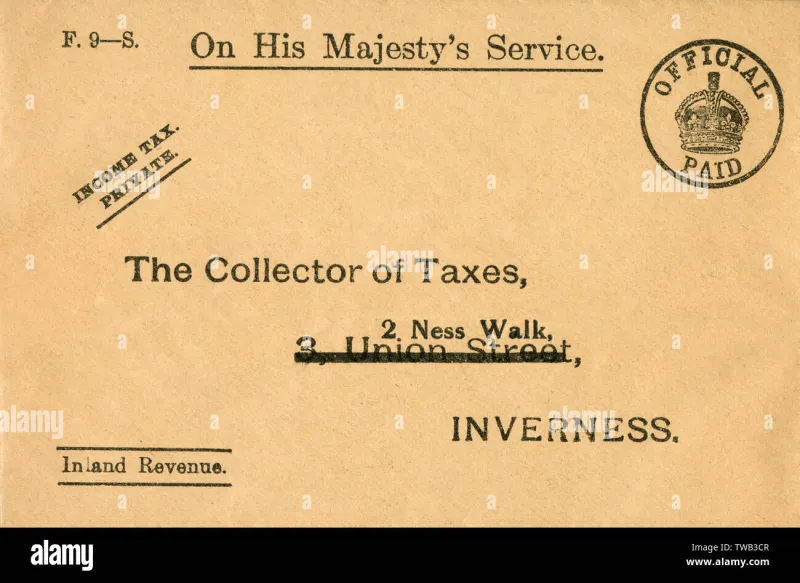
Photo: vintage government tax payment envelope check mailbox rural town, via www.alamy.com
At some point in the history of every bureaucratic disaster, there is a moment when someone realizes that a thing has been happening for a very long time that absolutely should not have been happening. This is that story. It involves a dissolved government, a town that never got the memo, checks that should have bounced against the void, and a legal question so strange that the lawyers involved reportedly needed a moment before they could answer it with a straight face.
Who does money belong to when you paid it to an entity that no longer exists — and the entity that replaced it quietly kept the cash?
The Transition That Forgot to Mention Itself
Regional government restructuring in the United States is not glamorous work. When counties are consolidated, special districts are dissolved, or administrative authorities are reorganized, the legal machinery grinds through a process that is thorough in some ways and remarkably sloppy in others. Debts get transferred. Assets get reassigned. Staff get absorbed or let go.
What sometimes doesn't happen — and this is the part that seems incredible until you've spent any time watching how government transitions actually work — is direct, proactive notification to every single entity that had a financial relationship with the old authority.
The assumption, reasonable on its face, is that people will notice. There will be announcements. The local paper will run something. Word will get around. The new authority will send updated payment instructions.
For this particular small community, none of that happened in any way that registered. The regional government they'd been paying taxes to was dissolved and replaced. The community, operating on the inertia of established routine, kept writing checks to the old authority's account information. The checks cleared. Life went on.
The Part Where It Gets Weirder
Here is the detail that elevates this from "embarrassing administrative gap" to "genuinely eerie": the checks were being cashed.
This is not a story about payments vanishing into a void. Somebody — some banking process, some residual account, some mechanism connected to the successor government's financial infrastructure — was processing those payments. The money was moving. It was landing somewhere. And whoever was on the receiving end, whether through inattention or deliberate non-intervention, was not picking up the phone to say, "We think you may be paying the wrong government."
This continued for years. The community filed its payments on schedule, maintained its records, and believed itself to be current on its obligations to a governmental body that had legally ceased to exist.
The successor authority, meanwhile, was presumably receiving funds from a source it may or may not have been actively tracking, under a payment reference that pointed to a dissolved predecessor. Whether anyone noticed and chose not to act, or whether the payments simply flowed through unexamined, is the kind of question that tends to produce very careful non-answers from the officials involved when it eventually comes to light.
The Moment Someone Finally Looked
Discovery, when it came, arrived through the most mundane of channels: an audit.
Somebody reviewing financial records — either at the community level or at the successor government — flagged a discrepancy. Payment references didn't match current account structures. Historical records showed a counterparty that hadn't existed for years. Someone pulled a thread, and the whole strange tapestry came into view.
The immediate reaction, by most accounts, was confusion followed by the particular kind of institutional silence that descends when nobody is sure who is supposed to be embarrassed.
The community had been paying its taxes faithfully. Technically, it had been paying them to no one — or to everyone, depending on how you looked at the successor government's relationship to the accounts it had inherited. The successor authority had been receiving money it may not have formally acknowledged receiving. And the legal question underneath all of it was genuinely novel: when you pay taxes to a dissolved government and a successor entity collects those payments without objection, has the obligation been met?
The Strange Question of Ownership
Lawyers who looked at this situation faced a problem that most tax law is not designed to handle.
On one hand, the community had made payments in good faith, on time, and through established channels. The fact that those channels connected to a defunct authority was not, strictly speaking, their fault — nobody had told them otherwise. An argument existed that their obligations had been satisfied, regardless of where the money technically landed.
On the other hand, payment to the wrong party — even an accidentally wrong party — does not always legally constitute payment of the underlying debt. If the successor government was the legitimate taxing authority, and the community had not technically paid the successor government, a case could be made that the obligation remained outstanding, regardless of what happened to the checks.
The resolution, when it came, was practical rather than philosophical. Successor authorities are generally treated as inheriting both the assets and the obligations of their predecessors, which includes funds that flowed through predecessor accounts into successor-controlled infrastructure. The community's payments were deemed to have satisfied their obligations. No back taxes were assessed. No refunds were issued.
Everything was quietly made right through the same mechanism that had allowed the error to persist: paperwork, processed without fanfare, filed without announcement.
What Institutional Inertia Actually Looks Like
This story is, at its core, a portrait of how institutions keep moving after the thing driving them has stopped. The community paid because that's what you do — you pay your taxes, on time, to the address you've always used, because disrupting that routine requires someone to actively intervene and change it.
Nobody intervened. Nobody changed it. And so the checks kept coming, and the money kept moving, and a dissolved government collected taxes for years after it had officially ceased to exist.
Somewhere in that sequence is a lesson about the gap between how we imagine government works — deliberate, coordinated, attentive — and how it actually works, which is mostly people following established procedures until someone tells them to follow different ones.
Sometimes that someone takes a while to show up.