One Cent, Zero Sense: The Penny That Broke Federal Law by Existing
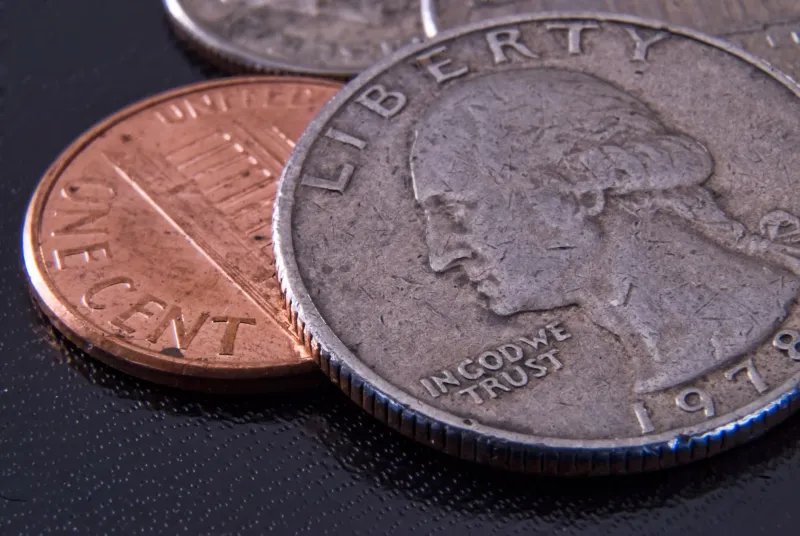
There are moments in American history when the full, magnificent absurdity of bureaucracy reveals itself — when a system designed to manage an entire nation's affairs gets completely derailed by something so small, so trivial, so genuinely ridiculous that the only appropriate response is to sit back and appreciate the chaos. The aluminum penny of 1974 is one of those moments. It is the story of how a single coin worth one cent became a legal problem worth considerably more than that, and how it eventually vanished from official records entirely, taking its constitutional crisis with it.
The Penny That Wasn't Supposed to Exist
By the early 1970s, the U.S. Mint had a copper problem. The price of copper had been climbing steadily, and the cost of producing a one-cent coin was approaching — and in some calculations, actually exceeding — the face value of the coin itself. This is the kind of economic situation that makes accountants visibly uncomfortable, and it prompted the Mint to start exploring alternatives.
 Photo: U.S. Mint, via content.propertyroom.com
Aluminum was the obvious candidate. It was cheap, it was lightweight, and it could be struck into coins without enormous difficulty. In 1974, the Mint produced approximately 1.5 million aluminum pennies as test samples, intended solely for evaluation by Congress as part of the legislative process for potentially changing the composition of American currency. These were not legal tender. They were not authorized for circulation. They were, in the strictest sense, props — physical evidence to hand to legislators so they could feel the coins, examine them, and make an informed decision about the proposal.
Members of Congress and their staff were given samples to review. This was standard practice. What was not standard practice was what happened next.
The Coin That Walked Out the Door
At some point during the review process, one of the aluminum pennies left Capitol Hill in someone's pocket. Whether this was intentional or an absent-minded oversight has never been definitively established. What is clear is that when the Mint began collecting its samples back — after Congress declined to authorize aluminum pennies for circulation — one coin was missing.
 Photo: Capitol Hill, via i.pinimg.com
The Mint asked for it back. The staffer in question, by most accounts, had simply kept it as a curiosity — a souvenir of an unusual legislative moment. But here's where the situation got complicated in ways that nobody had anticipated.
The coin had never been officially issued as currency. It had never been legally authorized for any purpose beyond internal review. But it had been physically handed to a person, who had taken possession of it, and who now had it in their home. And the question of whether the federal government could simply demand the return of a coin it had never officially released turned out to be a question that nobody had a clean answer to.
A Constitutional Puzzle Worth One Cent
Federal property law is, in most circumstances, reasonably clear about government-owned items. But currency — even test currency, even unauthorized test currency — occupies a strange space in that legal framework. The government's authority over issued money is well-established. Its authority over money that was produced but never issued, then physically transferred to a private individual, then requested back without any formal legal mechanism for reclamation? That was considerably murkier.
The Treasury Department's position was straightforward: the coins were government property, they had never been legally transferred, and they needed to come back. The implicit counterargument — which was never formally litigated but hovered over the situation like a very small, very shiny cloud — was that the physical transfer of the coin, however informal, created at minimum a reasonable question about the government's right to unilaterally reclaim it without due process.
 Photo: Treasury Department, via cdn.dribbble.com
For a coin worth one cent, the legal machinery required to resolve this question was genuinely disproportionate. Congressional staff, Treasury officials, and legal advisors were all drawn into a conversation about federal property rights, the definition of currency, and the limits of executive agency authority — all because of a coin that hadn't even been authorized to exist outside a committee room.
The Coin That Disappeared
The resolution, such as it was, arrived in the form of a non-resolution. Most of the aluminum pennies were recovered and destroyed. The test program was discontinued. Congress never authorized the aluminum cent, and the Mint eventually found other ways to address the copper cost problem. The missing coin was noted in official records, pursued through informal channels, and then — quietly, without fanfare — stopped being pursued.
At some point, the coin simply vanishes from the documentary record. Whether it was eventually returned, quietly kept, lost, or destroyed is not publicly known. The official position, to the extent that there is one, is that the matter was resolved. The unofficial position, pieced together from historical accounts, is that everyone involved eventually decided that the legal and political cost of formally resolving a dispute over one cent was higher than anyone wanted to pay.
Decades later, an aluminum 1974 penny surfaced in private hands and was authenticated as genuine — sparking a new round of legal questions about ownership, since the Mint had never officially authorized any of the coins to leave government control. The coin was seized by federal authorities in 2014, with the government's position being that it remained federal property regardless of how much time had passed or how many hands it had passed through.
The Least Valuable Most Powerful Coin in History
What the 1974 aluminum penny story really illustrates is the way that legal and constitutional frameworks, built to manage enormous systems and significant sums, can be completely destabilized by edge cases that nobody thought to plan for. Nobody at the Mint sat down and said, "What happens if a test coin leaves the building?" Nobody in Congress drafted a protocol for reclaiming unauthorized currency samples from staffers' coat pockets.
And so a coin worth one cent — a coin that was never supposed to exist outside a committee room, that was never legal tender, that was produced in a run that was ultimately scrapped — managed to create a genuine legal standoff involving the Treasury Department, Congressional authority, and federal property law.
If you ever feel like the system is held together with paperwork and wishful thinking, the aluminum penny of 1974 would like a word with you. Assuming the government hasn't already seized it.