The Fire That Made Ideas Disappear: America's Lost Invention Apocalypse
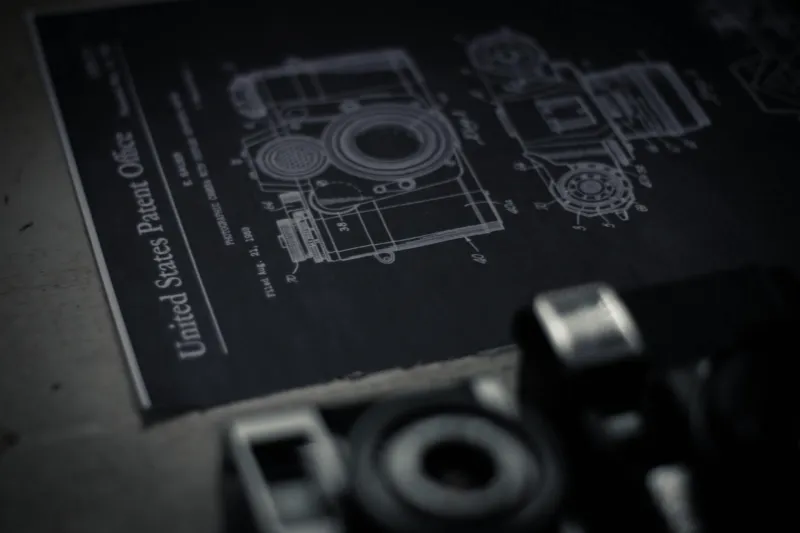
When Fire Became the Ultimate Patent Thief
In the annals of American disasters, most focus on lives lost or property destroyed. But the fire that consumed the U.S. Patent Office on December 15, 1836, accomplished something far more insidious: it made ideas disappear from reality itself.
The blaze didn't just burn through buildings and paperwork—it legally erased nearly 10,000 patented inventions from the official record, creating a bureaucratic black hole that would haunt American innovation for decades. In one night, the fire accomplished what no competitor, lawsuit, or economic downturn ever could: it made thousands of protected ideas fair game for anyone bold enough to claim them.
The Night Ideas Died
The Patent Office fire started in the early hours of a frigid December morning, likely from a faulty chimney in the building that housed America's most valuable intellectual property. By dawn, flames had consumed not just the building but the entire foundation of American patent law.
Every patent record from 1790 to 1836 was destroyed—nearly half a century of American ingenuity reduced to ash. The loss included the original patent models that inventors were required to submit, intricate miniature versions of their creations that served as proof of concept. These weren't just documents; they were the physical embodiment of American innovation, and they were gone forever.
What made the disaster truly catastrophic wasn't just the destruction—it was the legal implications. Under patent law, if there was no official record of a patent, it legally didn't exist. Thousands of inventors who had paid their fees, submitted their models, and received official protection suddenly found themselves holding worthless pieces of paper.
The X-Patent Era Begins
The government's response created an even stranger situation. Rather than simply reissue patents based on whatever evidence survived, officials established a new category: "X-Patents." These were patents that had existed but could only be restored if the original inventor could prove their invention had been officially registered.
The burden of proof fell entirely on inventors, many of whom had no copies of their original applications. They had to reconstruct their submissions from memory, gather witness testimony, and somehow demonstrate that their idea had been officially protected by a government office that could no longer prove it had protected anything.
Imagine trying to prove you owned something when the deed, the registry, and the courthouse had all been destroyed. That was the nightmare facing thousands of American inventors in 1837.
The Great Idea Grab
The legal chaos created an unprecedented opportunity for intellectual property theft. Unscrupulous entrepreneurs quickly realized that thousands of valuable inventions were now legally unprotected. If the original patent couldn't be proven, anyone could file for protection on the same idea.
Some competitors had been waiting years for certain patents to expire. Now they didn't have to wait—they could simply claim the ideas had never been patented in the first place. It was like a gold rush, except instead of staking claims to land, people were staking claims to other people's thoughts.
The cotton gin, the steamboat engine, dozens of textile innovations—all were suddenly vulnerable to being "reinvented" by someone with better lawyers and more complete records. The fire had essentially created a legal time machine, allowing people to go back and claim credit for inventions that predated their involvement by decades.
Bureaucratic Resurrection
The Patent Office began the herculean task of reconstructing America's intellectual property records. Investigators traveled across the country, interviewing inventors, examining surviving models, and piecing together fragments of documentation. It was like archaeological work, except they were excavating ideas instead of artifacts.
Some inventors got lucky. They had kept copies of their applications or had witnesses who could testify to their inventions' existence. Others weren't so fortunate. Brilliant innovations that had taken years to develop simply vanished from the legal record because their creators couldn't prove they had ever existed.
The restoration process took decades. Some X-Patents were successfully reconstructed and reissued. Others remained in legal limbo forever, their inventors unable to prove ownership of their own ideas.
The Inventions Lost to History
We'll never know exactly what was lost in the fire. The destroyed patents represented nearly half a century of American innovation during one of the country's most creative periods. Early steam engines, textile machinery, agricultural tools, and countless other devices that helped build the industrial foundation of America—all vanished from the official record.
Some historians estimate that hundreds of potentially revolutionary inventions were lost forever, either because their creators couldn't prove ownership or because competitors successfully claimed them as original ideas. The fire didn't just destroy documents; it rewrote the history of American innovation.
The Ultimate Irony
Perhaps the most absurd aspect of the entire disaster was that the Patent Office building itself wasn't fireproof—a rather glaring oversight for a building dedicated to protecting innovations that might include fire safety improvements. The institution charged with preserving America's brightest ideas was destroyed by the very problem some of those ideas might have solved.
The 1836 Patent Office fire remains one of the most consequential disasters in American history, not for the lives lost (remarkably, no one died) but for the ideas that disappeared. It's a reminder that sometimes the most valuable things we lose in disasters aren't the ones we can see burning—they're the invisible creations of human ingenuity that took years to develop and mere hours to erase forever.
In a nation built on innovation, the fire that consumed the Patent Office didn't just destroy the past—it stole the future from inventors who would never get credit for ideas that officially never existed.