The Word Forecasters Couldn't Say: How America Banned 'Tornado' From Its Own Forecasts
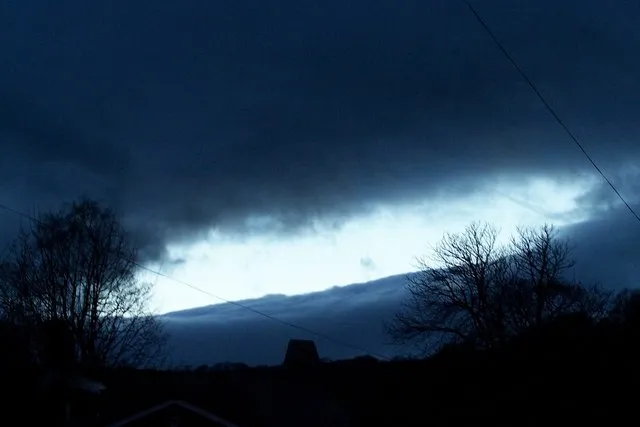
Photo: Terry Robinson, CC BY-SA 2.0, via Wikimedia Commons
There was a word the United States government did not say. Not in public, not in forecasts, not in warnings issued to millions of people standing in its path.
The word was "tornado."
From 1887 until well into the 20th century, the Weather Bureau — the ancestor of today's National Weather Service — had an unofficial but ironclad policy: the word tornado would not appear in public forecasts. Meteorologists could track storms. They could note "severe local disturbances." They could warn of "threatening weather conditions." But the T-word itself was forbidden, and the reasons sound almost too bureaucratic to be real.
The Logic of Letting People Die, Politely
The Bureau's reasoning went something like this: tornado warnings would cause panic. Panicked citizens would trample each other fleeing buildings, businesses would shut down over false alarms, and — this was the real fear — if the Bureau predicted a tornado and none arrived, public confidence in the entire weather service would collapse. Better, the thinking went, to say nothing than to be occasionally wrong.
There was even a legal sword hanging over forecasters' heads. An 1890 law made it a federal offense — punishable by fine — for a Weather Bureau employee to issue forecasts "to which no reference is made in the daily weather map" or to warn of storms without official authorization. In other words, a scientist who saw a killer storm forming and picked up a phone could, on paper, be breaking the law.
And it wasn't hypothetical. In 1948, Air Force meteorologists Ernest Fawbush and Robert Miller at Tinker Field in Oklahoma correctly predicted a tornado would strike their base — days after a twister had already wrecked it and embarrassed the military. Their forecast verified. The base was saved. And the reaction from on high wasn't a medal; it was anxiety. Their methods were scrutinized, their authority questioned, and for years tornado prediction remained a career risk. Forecasters who issued warnings that didn't pan out faced investigations. Forecasters who stayed silent faced nothing — no matter what the sky did.
The Storm That Changed the Rules
The taboo finally cracked in 1950, when the Weather Bureau formally reversed policy and allowed tornado warnings. But old habits die hard in government. As late as 1957, meteorologists were still being instructed to soften language, and the real cultural shift didn't arrive until a disaster made silence indefensible.
That came on April 11, 1965 — Palm Sunday — when one of the deadliest tornado outbreaks in Midwest history tore through Indiana, Michigan, and Ohio, killing more than 250 people. Investigations afterward found that warnings existed but were muffled by jargon: alerts that spoke of "weather activity" and funnel clouds "possible" while actual tornadoes were on the ground. The public, it turned out, hadn't been panicking all those decades because the government had never given them the chance.
The aftermath rewrote American weather communication. Watch-and-warning systems were standardized. The word "tornado" became not just permitted but mandatory — specific, blunt, unmissable. Today, when a National Weather Service meteorologist interrupts programming to scream about a confirmed tornado, they are doing something their predecessors could have been disciplined for.
Being Right Was the Crime
Step back and the strangeness comes into focus. For roughly six decades, the official American approach to one of nature's deadliest phenomena was euphemism. Meteorologists — people who devoted their lives to understanding storms — were structurally punished for accuracy and rewarded for vagueness. The system wasn't malicious; that's what makes it eerie. It was a perfectly rational fear of false alarms and panic, stacked up over decades, until it became a policy that amounted to hoping nobody needed the word.
The Fawbush-Miller forecast is the detail that belongs in a novel: two Air Force officers, standing in the wreckage of their own base, predicting another tornado and getting it exactly right — then spending years defending the act of having said so.
The next time your phone blares a tornado warning with your specific street on it, remember that for most of American history, that alert was not just unavailable. It was unspeakable.